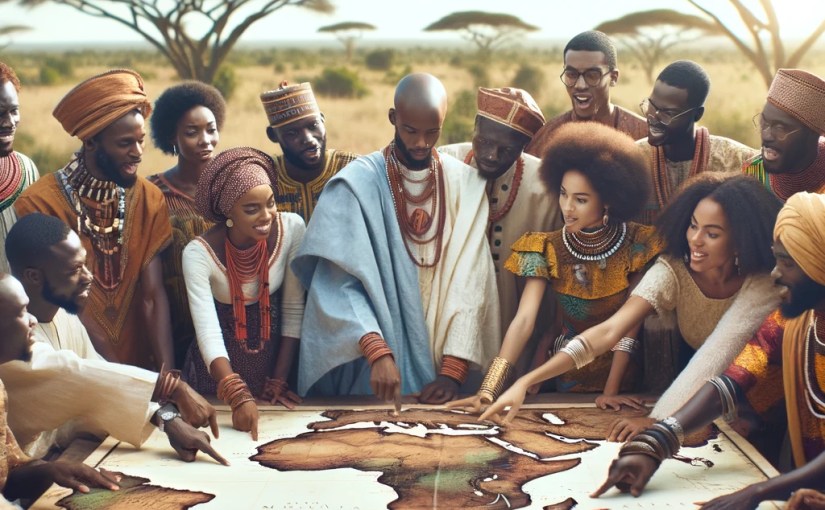
Africa, it is time to reassess the names of some territories, landmarks, and places you have continued from colonization, and which you have not corrected since gaining independence. It is time to reclaim your naming rights. I have some examples to initiate broader reflection:
Question 1: Do you know why the city “Port Harcourt” in Nigeria is called “Harcourt”? Richard Bourne says the following in his book about the former Colonial Governor-General of Nigeria Frederick Lugard, who oversaw the amalgamation of the Northern and Southern Protectorate to form “Nigeria” in 1914:
“Lugard finished his term in Hong Kong in March 1912 and, exploiting his status and contacts, successfully lobbied Lewis ‘Loulou’ Harcourt, Viscount Harcourt, Secretary of State for the Colonies in the Liberal government, to become Governor-General of Nigeria. In August 1913, as a gesture of thanks towards his patron, Lugard got his permission to name a newly built port on the Niger ‘Port Harcourt’” (p. 11).
1913 – 2024 = 111 years! Question: why in 111 years has the name of a landmark in Nigeria not been renamed after one of many prominent Africans of the native ethnic group in that region? Why are you so comfortable continuing this colonial legacy instead of reclaiming your naming rights? Where is the African leadership? How can you accept one of your cities named after a colonial head because of a backdoor political deal to rule your people?
Question 2: Between Zambia and Zimbabwe, the charming Zambezi River falls over a cliff and forms a beautiful and massive waterfall! The enchanting scene is such a marvel that it is named one of the wonders of the Nature world! However, Why is this natural wonder in Africa called “Victoria Falls”? According to Brittanica:
“The British explorer David Livingstone was the first European to see the falls (November 16, 1855). He named them for Queen Victoria of the United Kingdom.”
1855 – 2024= 169 years! Question: why in 169 years has the name of this gorgeous natural landmark not been renamed after an African Queen? Why are you comfortable continuing this colonial legacy that pushes your own history to the side? Also, are you not skeptical at the coincidence of the waterfall bearing a non-African name as it is labeled a natural wonder of the world?
Question 3: Why is Victoria Island in Nigeria called “Victoria”?
My Theory: The Royal Niger Company (1879-1900) received its charter from the British Government and operated in West Africa signing and enforcing unfair trade deals and taking territories. Their charter was eventually revoked and their assets transferred to the British Government who, on January 1, 1900, colonially took control of the area they would later amalgamate to Nigeria in 1914. During this time of the Royal Niger Company, Victoria was the queen of the UK (1837-1901). Therefore, I suspect “Victoria Island” in Nigeria was named after her.
Question: Why in over 100 years has the name not been changed to its original name, or renamed after a prominent figure in the ethnic group who for hundreds of years have historically populated the area? Where is the leadership in Africa?
The same pattern repeats itself in all African countries today. The relic of the colonial era that is shamefully continued. But it is time for change and the African people need to reclaim their naming rights and make a comprehensive change. Moving forward, every single landmark, natural wonder, city, town etc. on African soil that bears its legacy from colonization needs to be renamed with an African name. The African people had names for these territories and places, so it is time to revert to those names or give them a new one… but in the image of the African people! Stand up my people.
Onward & Upward!
~Dr. Ikenna Ezealah

 Nation Upbuilding