
The saying “Africa must unite” is not just a philosophical ideology, but a practical necessity for survival and continental progress. I have earnestly reflected about the way forward for Africa from every possible angle, and have concluded:
“Without collective African unity, no African country in the present or immediate future can develop into a global power.”
Here is an illustration using Senegal. Imagine Apple and Google setup operations in Senegal, and Senegal enjoins them to strictly follow local laws to avoid legal consequences. Now consider the Senegalese GDP compared with the revenue of the multinational firms.
Senegal 2023 GDP: $64 billion
Apple 2023 Profit: $97 billion ($383 billion revenue)
Google 2023 Profit: $73.795 billion ($307 billion revenue)
Question: How can Senegal whose GDP is less than the profit of both firms realistically have the economic power to hold them accountable? How can Senegal alone withstand the financial onslaught and greater leverage of the stronger multinational firms if they flexed their might through various means?
To have effective enforcement power over multinational entities and stronger foreign countries, the continent needs to work together because the collective economic and political strength, when strategically coordinated, will be able to outweigh and overpower. It is as simple as that.
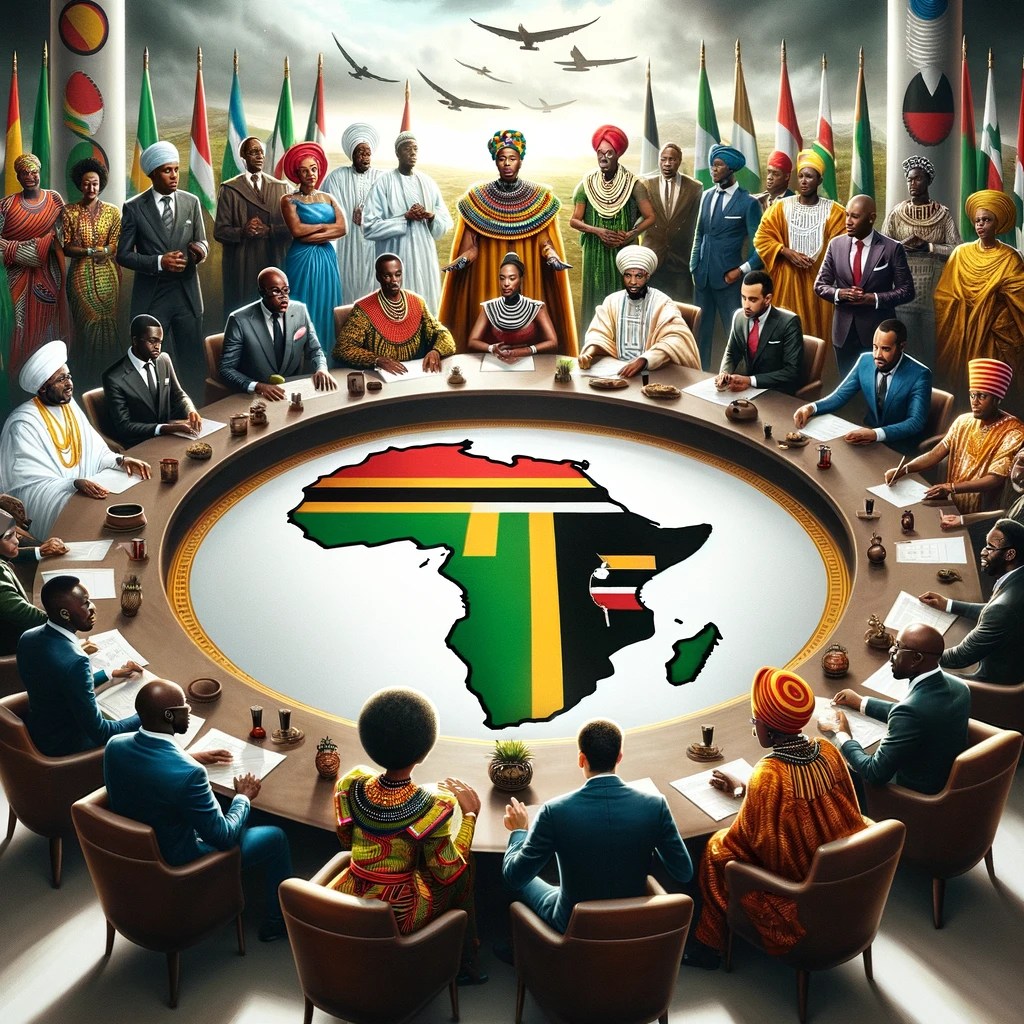
Imagine if Africa has a Continental Congress that forms overarching unifying policies so there are two sets of laws: domestic laws of the African country, and an overarching continental law that applies when specific criteria are met. Now imagine if one of these policies is summarized as follows:
“If a multinational firm operates in any African country and their annual revenue equals or exceeds the GDP of the African country, then the multinational firm will no longer be subject to the local laws of the said country but superseding continental regulation and oversight by the African Continental Congress.”
The cross-border oversight would ensure that monitoring, regulation, and enforcement would be continental in scope and effect through tightly coordinated political and economic power. The same holds true in other sectors. So, if African countries obstinately insist on pursuing their individual courses and policies because they are enjoying the spoils of “sovereignty”, then they will be relentlessly picked apart and remain weaker.
But Africa’s unique geography, cultural heritage, history, resource endowment, and present circumstance in global geopolitics absolutely requires that, to properly develop and counter all adverse influences, all African countries be closely coordinated so they work as effective and efficient parts of a greater whole.
Africa’s strength lies in its unity, whereby smaller rivers join into a stronger ocean of collective might whose waves can then guide the march of events to a brighter African destiny.
“Africa must unite.” So the Osagyefo Kwame Nkrumah was right!
All for one and one for all. Onward & Upward!
~Dr. Ikenna Ezealah

 Nation Upbuilding