Dr. Ikenna A. Ezealah is a is a Builder of the African Future, a visionary, and leader. Dr. Ezealah is a unique multidisciplinary professional whose specialty lies in global governance, international trade, investment, and development law (ITID law) strategy focused on African nation-building and long-term economic transformation. Dr. Ezealah holds a Juris Doctorate (JD), a PhD in Higher Education Leadership, an MBA, a BBA. His academic and professional formation sits at the intersection of law, public policy, economic strategy, and institutional leadership, equipping him to operate across complex national and multilateral environments geared toward African nation-building.
I am earnestly committed to the Cause of African Nation-building. So I focus my energy on what affects the lives of the African people, and prioritize relationships with people who are earnestly committed to this goal, or who enhance my life in varied ways which enables me to better pursue this goal.
In this process, life naturally orchestrates connections with people at all levels—even the highest professionally—who also share this goal in their own unique way.
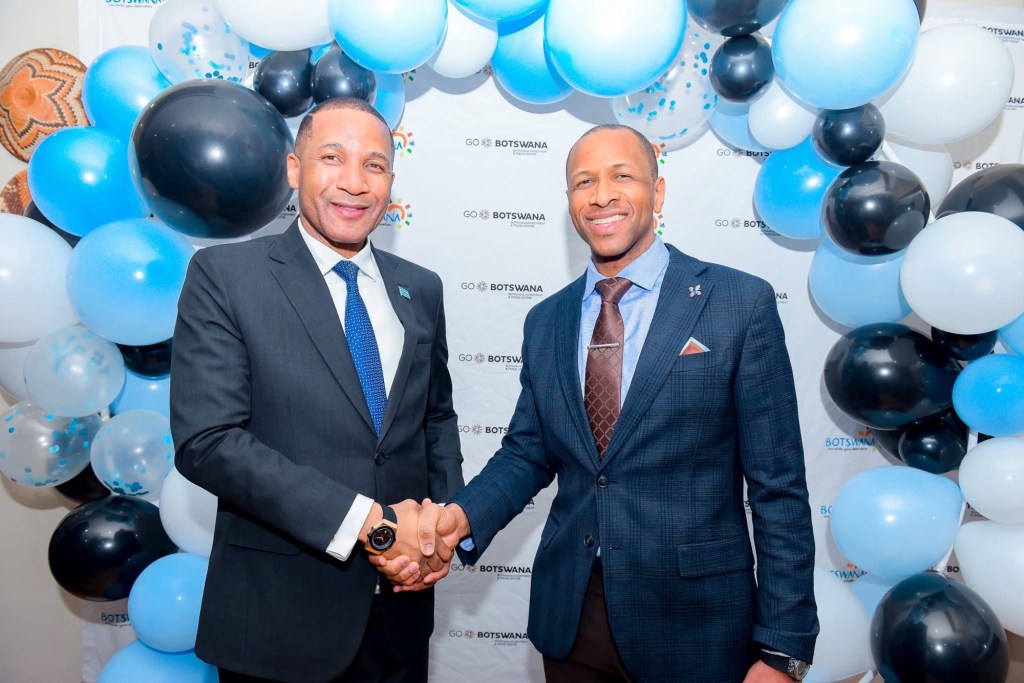
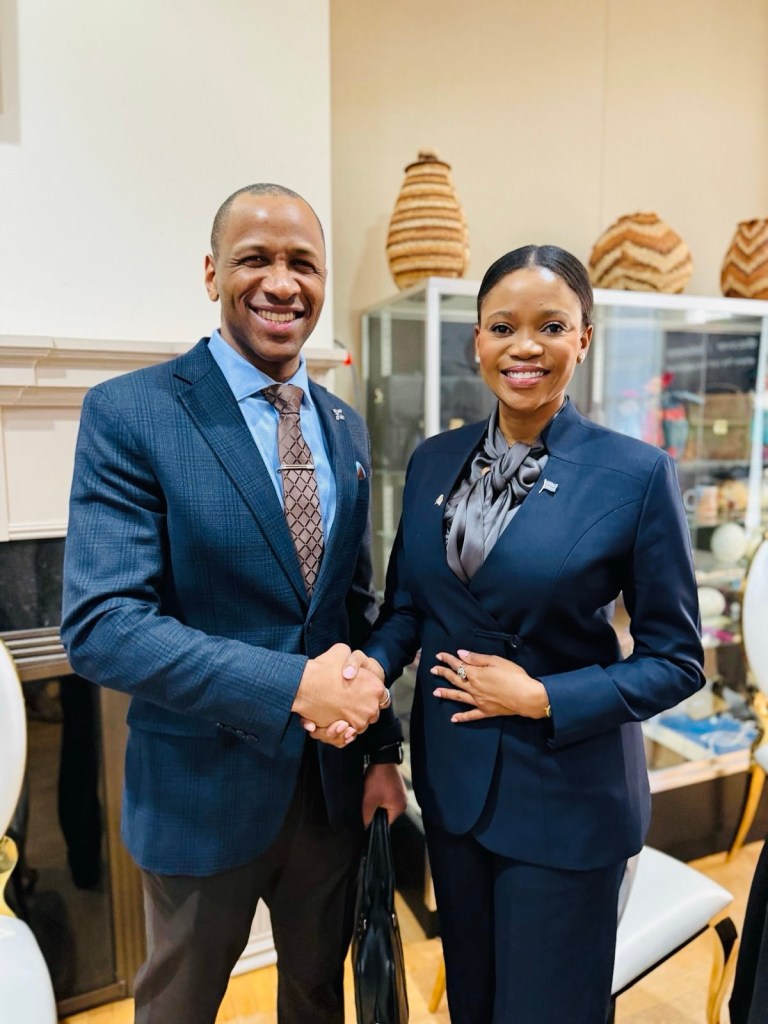
One such encounter recently occurred on Friday, March 7, 2025 at the Embassy of Botswana in Washington DC. There, I had the pleasure of meeting and interacting with two other nation-builders and rising political stars in Africa: the newly elected President Duma Boko of Botswana, and Bogolo Kenewendo, Minister of Minerals and Energy of Botswana. Of course, all discourses had one theme: African nation-building. After meeting them, my confidence in Botswana’s bright future is reinforced.
President Duma Boko and Dr. Ikenna EzealahMinister Bogolo Kenewendo and Dr. Ikenna Ezealah
Photos are great, but I should emphasize that my aim is beyond photo-ops. It is focused on a broader coalition-building of people who are committed to forming strategies and taking energetic actions that will physically manifest in the continent to directly improve the lives of the African people.
I hope to unite with such people who are focused on building a brighter African present and future.
On this momentous day, March 6, 2025, I join the people of Ghana and the Global African community in celebrating the anniversary of Ghana’s independence, achieved under the leadership of the Osagyefo Dr. Kwame Nkrumah! I also honor The Big Six of Ghana (Kwame Nkrumah; Joseph Boakye (‘J.B.’) Danquah; Emmanuel Obetsebi-Lamptey; Ebenezer Ako-Adjei; William Ofori Atta; Edward Akufo-Addo)—and all others who contributed to the struggle for Ghana’s political liberation. Their efforts not only secured Ghana’s independence, but also set a precedence for other independence movements across Africa.
On March 6, 1957, Ghana became the second African country to gain independence. Although it is widely regarded as the first, historical accuracy gives that distinction to Sudan, which gained independence from British-Egyptian rule on January 1, 1956—making it the first African country to gain independence in the year 1956, before Ghana.
Sudan’s colonial administration was unique —it was governed under an Anglo-EgyptianCondominium (1899-1956), meaning it was jointly ruled by Britain and Egypt, rather than being a direct colony of a single European power. So, while Sudan was the first African country to gain independence in 1956, Ghana (1957) was the first African country to gain independence from direct European colonial rule (British Gold Coast).
As a Garvey-Nkrumah Legal Fellow, our delegation visited Ghana and Rwanda in the Summer 2024. After completing our official business for the trip—including a meeting with the President of Ghana—we visited the Kwame Nkrumah Memorial Park & Mausoleum in Accra. The previous Summer, I had read Dr. Nkrumah’s autobiography and had devoted time to understanding him not just as a leader, but as a person—exploring his deeper aims and motivations. This experience was deeply inspiring and further reinforced my commitment to African nation-building!
On July 19, 2024, I stood beside Dr. Nkrumah’s statue, mirroring his forward-pointing gesture that powerfully embodies his famous words: “Forward ever, backward never.” Then I knelt before his grave, filled with different intuitions. Sometimes in life, the most precious things cannot be shared.
“Osagyefo Dr. Kwame Nkrumah, a thousand thanks for your positive example of visionary African leadership, and your unbending commitment for the welfare and progress of the African people. Most of all, your natural reverence for God. These are noble qualities desperately lacking in African leadership today, and we feel the big gap left by your absence.”
I will carry the torch of African progress forward, working diligently to ensure it burns brighter in this generation—singularly focused on the mission of African nation-building!
Confidently I walk the path of destiny—“Forward ever, backward never”—focused upward, forever onward!
Happy 68th Independence Day Ghana!
~Dr. Ikenna Ezealah “Builder of the African Future”
Charterhouse, a 400-year-old leading British independent school, has opened in Lagos (Lekki area), and aims to deliver prestigious British education in Nigeria (video links below). The campus is impressive, but in the spirit of African nation-building we must ask a few preliminary questions:
Who is ensuring their curriculum educates students on their African identity and heritage, instills patriotism, and empowers them to use their abilities to develop Nigeria and Africa?
Are there periodic government curriculum audits to ensure the school aligns with a national educational agenda for Nigerian students? Is there even a national vision?
Why has Nigerian leadership not defined and designed its own unique education system as the national standard—one taught in buildings that reflect ennobled, indigenously designed architecture?
What about most Nigerians who attend dilapidated, underfunded public schools? Where is their help? Who is securing their future?
At ₦42 million per year, how accessible is this education to the average Nigerian, let alone the poor? Did the government mandate a certain number of seats be reserved—via lottery—for underprivileged children from various regions to attend for free?
I appreciate Charterhouse’s efforts, but this is yet again another colossal failure of Nigerian leadership that reflects Africa generally —a leadership always imitating foreign models rather than creatively forming its own indigenous institutions. Additionally, the chronic neglect of public education that leaves most Nigerian children without a level playing field. Where is genuine leadership? We see the problem —now it is our duty to change it!
~Dr. Ikenna Ezealah “Builder of the African Future”
News: The African Union this month [February 2025] has announced the establishment of an African Credit Rating Agency (AfCRA). The AfCRA is set to officially launch in June 2025 as part of the African Union’s broader agenda for financial integration and independence.
A Vision Come True: In October 2023, I published an essay “Seven nation-building suggestions for African governments to use during contract negotiations with foreign companies.” There [see #4 on the link] I recommended the establishment of an African Rating Agency as one of my visions for Africa. Now, almost 1.5years later, it has come to pass.
This is one of several instances over the past few years where this has happened. Here are two other examples:
(1) the African School of Governance that Rwanda’s President Paul Kagame and former Ethiopian Prime Minister Hailemariam Desalegn recently established; also (2) the Africa Connect initiative that the AfDB President, Akinwumi Adesina, announced in 2022 in partnership with the WHO, to leverage Africa’s physicians in the diaspora.
Although my proposals were extensive in both their nature and application, these initiatives mentioned above are promising beginnings and positive developments for Africa, which truly gladdens me. They serve as reinforcement that the other visions I have received and documented—though not publicly shared—are not only real and essential for African nation-building, but will come to fruition—during or after my lifetime.
It is my sincere hope that earnest Builders of the African Future will unite and diligently work to manifest these visions so that, in time, these visions will become a realized blessing for the welfare and progress of the African people!
Nation-building visionaries (NBVs) is what African countries need in office to move forward. NBVs who are first of all committed to the welfare and progress of their people, who possess the strength of will to take bold action, who understand the global environment and the nuances, who are highly educated with tremendous capacity and volcanic energy, and who have an original vision with tactical strategies to leverage the diaspora for aggressive nation-building.
Let us be honest, we already know these World Bank and IMF recommendations are not meant to develop Africa and cure its ails. But at best is meant, much like in the medical industry, to keep patients reliant on drugs to manage their symptoms instead of permanent cure, so they keep coming back to the doctor’s office and big pharma to spend money.
The drugs is analogous to dependency on all things foreign: loans, technologies, industries, imports, manufacture goods, companies etc. Basically, to ensure complete self-sufficiency is never really attained and with it the establishment of strong local industries through mass industrialization and manufacturing, and thus the sound utilization of local natural resources. There is no use being sheepish about it, just face the truth boldly and openly.
One should not get frazzled, but just calmly recognize that everyone is simply pursuing their own national interests! The issue in Africa today though, is that in most countries it lacks nation-building leadership in office who clearly defines and boldly pursues its own national interests that also serves the African agenda. Is there even a clear African agenda set by African leaders for global geopolitics today? In most cases African leaders just fly around to these global summits issuing grand declarations that rarely translates into anything real on ground, then they just copy the priorities other countries establish for themselves. A nation-building visionary would never do this!
Listen… Builders of the African Future, if you are serious about change in Africa you must step forward and firmly take the lead. Drop your tentative volition and wake up from this comfortable private life that keeps you numb to your duty. You must take personal ownership of Africa’s development and work to ensure you build a society for the welfare and further development of your people, the African people. No one will give you the opportunity, so you must work to create it for yourselves! Remember this and take the lead.
Onward & Upward!
~Dr. Ikenna Ezealah “Builder of the African Future” aka Dr. Juris-Diplomat
Are Western countries (now also Eastern ones) interested in Africa’s genuine development? Let the truth, which was always perceived yet relegated to the realm of conspiracy theory, speak for itself.
Africa, in the global development classroom, while your classmates in other continents are awake doing the assignments you are in class fast asleep. And many of your citizens who are awake are even completing assignments for their classmates while neglecting theirs (brain drain). Wake up!
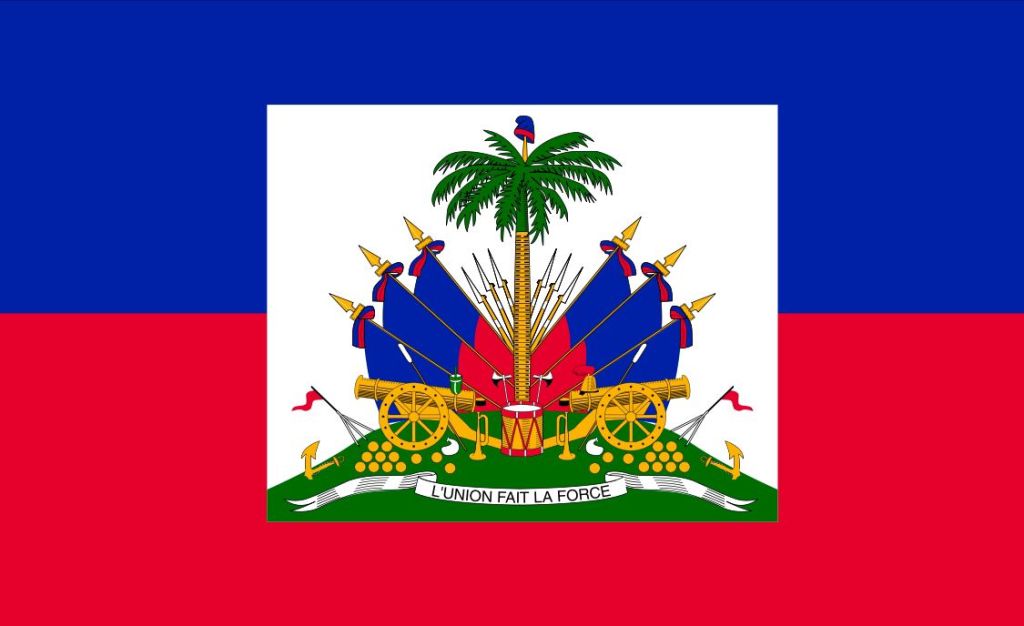
We hear through school and media that the US/West is in Haiti to promote robust democracy, economic development, and good governance for the progress of the Haitian 🇭🇹 people!
If this statement were Pinocchio’s nose, it would grow enough inches to poke the moon, just to boomerang back and shake the earth, then spiral sideways and rattle the stars. Give me a thousand breaks.
See the commentary by Èzili Dantò on US interests in Haiti.
It is always and everywhere historically the same story: the same aim, similar plot, same characters, same outcome.
A contributing factor is the lack of visionary leadership to unite Africa as the base of all global peoples and countries of African descent. This leads to geopolitical division and isolation, where individual countries can be strategically picked apart.
Collectively, political leadership in Africa today is dreadfully poor (with few exceptions). As a result, you do not have big-picture strategic thinking and bold action but mostly low-voltage politicians who are predictable and uninspiring.
Let me give you a small example of big-picture thinking.
In Djibouti, there are at least five foreign military bases: US, France, China, Japan, and Italy. Why? Djibouti is strategically located by the Bab-el-Mandeb Strait, which separates the Gulf of Aden from the Red Sea and controls the approaches to the Suez Canal. The latter is responsible for approximately 12% of global trade, 30% of all global container traffic, 7–10% of the world’s oil, and 8% of liquefied natural gas, etc.
Given that power to control global trade and influence global geopolitics, why would African leadership allow foreign bases in such a strategic location? The AU is embarrassingly weak and at this point I doubt it’s current usefulness and effectiveness. For if you cannot provide the firm leadership the African People need, why do you still exist as an organization?
Visionary African leadership would only allow a base with a joint force of African soldiers stationed there to control traffic in that area, so Africa can become a major player in global affairs. Africa today lacks real political leadership. There are a few exceptions, but the average in office is poor.
Africa needs a new wave of Political Lions to take firm possession of the various countries in order to forge and implement a strong and comprehensive strategy that will secure the interests, ensure the development, and promote the progress of the global African people.
Then Haiti will have the support it needs to be truly independent.
Today we commemorate the birth of Jesus the Christ who came to Earth to bring the Light of eternal values through His Word that brings redemption and opens the Heavenly Gate, so that we might experience abiding joy and peace. We say thank you to God for this birth of Grace!
On this day I ask, “how can my life be an instrument of service that converts the Light He brought into a furthering activity on earth?” My answer:
In departing the Earth, Jesus was reported to say, “I go to prepare a Place for you!” This is Spiritual Kingdom-Building. Then we also recall the words of Scripture, “Thy Will be done on Earth as it is in Heaven”, i.e., we will do below (Earth) what is done above (Heaven). Therefore, the Spiritual Kingdom-Building above (heaven) for me is equivalent to the activity of Nation-building below (earth). So “I go to prepare a Place for you!” I convert into the service, “I will work to Nation-build for you [African people]”.
Therefore, Nation-building driven by eternal values is Scripture-based… as above so below. To me it is just following Divine Instructions for the welfare and further development of the African people!
May we each find our Star of purpose and diligently work towards its realization, whose light will be the gift of gratitude we offer back to God for the Grace of the birth of His Son this Christmas Season.
I am wishing everyone light and joy of the Season, also success and goodwill this upcoming New Year.
Summary: I ask the fundamental question: “For Africa to Develop, Is Democracy the Right Form of Government?” I address it by reexamining the basic principle of the US system, the colonial systems, and some developed countries today. A pattern emerges that shows a different truth than what is sold to Africa. The basic principle which Africa can use to achieve development once it is indigenously adjusted to its context.




 Nation Upbuilding