Yes, it is time to resurrect the revolutionary spirit in Africa. Africa needs a new class of revolutionary builders.
Builders who will not just copy socialism of the East or democracy of the West, but who are prepared to search in the African Spirit and heritage then build new systems that specifically works for Africans.
In Africa today, where are the Lions, the revolutionary Thunderhawks, and the nation-building Visionaries with iron in their souls? Whose inner being commands global respect just by its regal nature?
The warriors who live and lead with a great love for their people, and who would rather enter a coffin than to betray the welfare and further development of their people!
But in Africa today a desolate picture presents itself.
What you mostly have, with few exceptions, are African leaders Iscariot who betray their people for 30 pieces of silver (loans and status quo), and pitilessly lead them to socioeconomic crucifixion!
But even as the tombstone of Africa is apparently closed, the world will witness the African Spirit resurrect into a renaissance under the leadership of a new class of emerging Lions, revolutionary Thunderhawks and nation-building Visionaries.
And then “the lukewarm will be spewed out” in leadership, so only those leaders who are serious about bringing value and progress to the African people will remain.
The mandate is clear: perform in office, or be taken out of office. No longer should wretchedness in leadership be tolerated in Africa. The people have to raise their standard to get better leadership, and remember that the best leader for them might come from a different tribal group!
A new class of revolutionary builders are needed with a firm love for God and their people, and an unwavering commitment to ensure the progress and continuous development of Africa for the welfare of the African people and the benefit of the world community.
Lions of Africa, here the call and step forward.
Onward & Upward!
~Dr. Ikenna A. Ezealah, Ph.D., MBA Builder of the African Future JD Candidate ‘25
“It was the best of times, it was the worst of times, it was the age of wisdom, it was the age of foolishness, … it was the spring of hope, it was the winter of despair…”
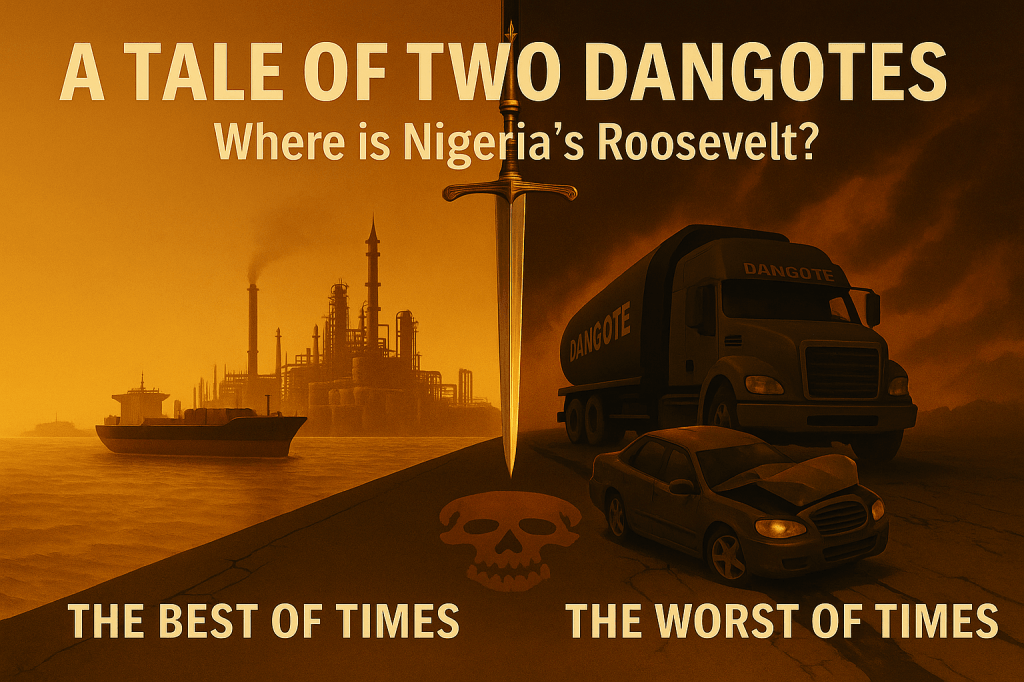
The famous introduction to Charles Dickens’ A Tale of Two Cities that was written to capture the social contradictions in London and Paris before the French Revolution, could just as well describe the Nigerian people’s attitude toward the business activities of billionaire Aliko Dangote. His empire embodies both triumph and tragedy: on one hand, unprecedented industrial achievement; on the other, the daily menace of his trucks, whose accidents leave a trail of injuries and fatalities.
The Best of Times Dangote is praised as the face of African enterprise. His ventures include the monumental Dangote Refinery, a $20 billion facility with capacity for 650,000 barrels per day, which is Africa’s largest and among the biggest single-train refineries in the world. He has also announced plans to build Nigeria’s largest and deepest seaport in Ogun State, a project set to transform exports of fertilizer and industrial products. To many, these feats symbolize Nigeria’s potential, Africa’s rising industrial base, and the triumph of private capital over chronic state inefficiency.
The Worst of Times Yet the very name “Dangote” also conjures images of fatalities on Nigerian highways through his trucks. His cement trucks have become a menace, notorious for reckless driving and deadly accidents. Between 2015 and 2025 alone, a report on Dangote truck accidents estimates about 393 deaths and 1,040 injuries. But anyone familiar with Nigeria knows these numbers are drastically underreported. Security services and government agencies, compromised by collusion, coverups, and corruption, shield such abuses from scrutiny. Multiply those figures by at least ten, and one approaches reality. So the paradox is clear: as Dangote builds monumental projects to power Africa’s future, his trucks simultaneously leave a trail of injuries and coffins on Nigerian roads. Who will hold Dangote accountable?
The Role of Leadership This contradiction highlights the vacuum of political leadership in Nigeria. Visionary governance exists to regulate markets, enforce accountability, and protect citizens from exploitation, while coordinating private achievement toward a national vision. But historically, Nigeria’s leadership has been atrocious… more cabal than custodian, more profiteer than protector.
Where is Nigeria’s Theodore Roosevelt?
Roosevelt’s Example At the dawn of the 20th century, America faced its own Gilded Age of monopolists and “Robber Barons.” President Theodore Roosevelt confronted them directly, earning the title “Trust-Buster.”
He used the Sherman Antitrust Act with unprecedented vigor to break monopolies that strangled competition and exploited consumers.
He targeted giants such as Northern Securities and Standard Oil, forcing courts to dissolve them.
He distinguished between “good trusts” and “bad trusts,” insisting that government regulate where it could not dismantle.
His Square Deal promised fairness: balancing corporate power with the welfare of the people.
Roosevelt was not against enterprise; he was against exploitation. His mission was to ensure that no corporation, however powerful, could trample the public interest.
Nigeria’s Missing Guardian A true Nigerian leader—a nation-building visionary and guardian of the people’s welfare—would never tolerate the impunity of Dangote’s cement trucks. Leadership is not only about setting a vision for industrial growth, for it is also about defending citizens from harm by holding even the most powerful enterprises accountable.
But most of Nigeria’s ruling elite have no such resolve. When leaders themselves are chief exploiters, how can they regulate others? You cannot expect arsonists to serve as firefighters; to do so would be to extinguish the very flames that sustain them. The political class and the oligarchs are in business together, feasting on a climate of underdevelopment that ensures their continued enrichment.
Naturally, this statements do not imply that all Nigerian politicians are ignoble and ineffective or that Dangote trucks always cause harm. Certainly not. For there are promising individuals in the Nigerian political class and Dangote’s enterprise does much good in Nigeria. The statements merely highlight the unchecked status quo: the exploitative political class and the hazards of Dangote cement trucks, both of whom cause harm with little accountability.
Nigeria Needs Its Roosevelt Nigeria’s story need not remain a cycle of “best of times and worst of times.” With the growth of private enterprise, the country urgently needs leadership strong enough to regulate markets, defend the people, and direct industry toward a common good.
This is not a call to imitate a foreign president. It is a call for the emergence of a new leadership class: men and women who are both builders and guardians, who see government not as personal spoils but as a sacred trust. Leadership that is aggressive in nation-building yet unwavering in defending the Nigerian people against harm and exploitation. And this applies to Africa at large. For without such leadership, the continued hazards of Dangote trucks and all they symbolize may one day become the spark of Nigeria’s own reckoning, just as Dickens’ tale foreshadowed the French Revolution. Nigeria needs its Roosevelt.
The Callfor Guardians If Nigeria wishes to avoid that fate, it must change course. It must raise up a leader who is a servant of God, a builder of the African future, and a guardian of the people’s welfare and prosperity.
May the Lions of Progress hear the call of destiny and step forward for service!
Focused Upward, Forever Onward!
~Dr. Ikenna A. Ezealah, Ph.D., MBA Builder of the African Future J.D. Candidate ’25
A simple solution to African officials delaying salary payments of public sector workers.
There are many stories of public sector workers in Africa experiencing severely delayed salary payments that can sometimes last many months. They wait for the governor or minister to disburse the funds, but receive either excuses or are ignored.
First, African Officials, this your rascality needs to stop or a ferocious reckoning will eventually come. People work honestly and diligently, and you do not pay them. Just do the right thing and pay them.
Second, what is a simple creative solution to this salary epidemic? For African nation-building, I propose the following:
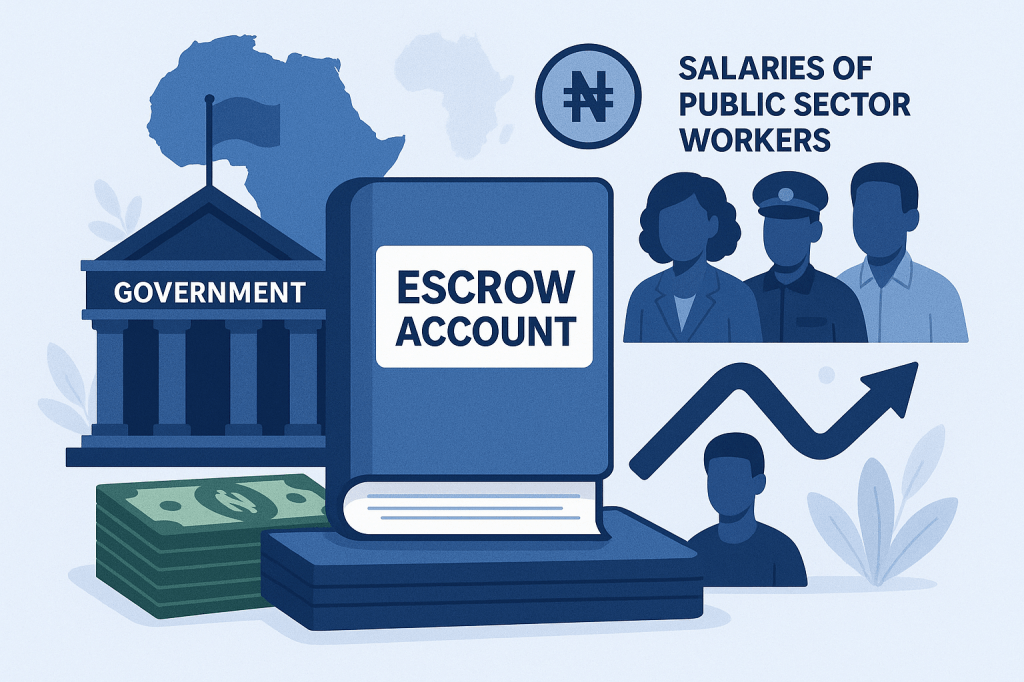
A law needs to be passed that makes payment for certain public sector workers a first line item on the national and state budgets. Meaning the funds for salaries should not be at the discretion of the Minister or Governor, but should annually go to an irrevocable escrow account for salaries.
From there, a team of non-government custodians would disburse the salaries for workers at the appropriate intervals. Naturally with regular monitoring and audits. This way, salaries are prioritized and it is removed from the discretion of government officials to an independent escrow account funded as a first line item on the national and state budgets.
Simple solution.
~Dr. Ikenna A. Ezealah, Ph.D., MBA Builder of the African Future J.D. Candidate ‘25
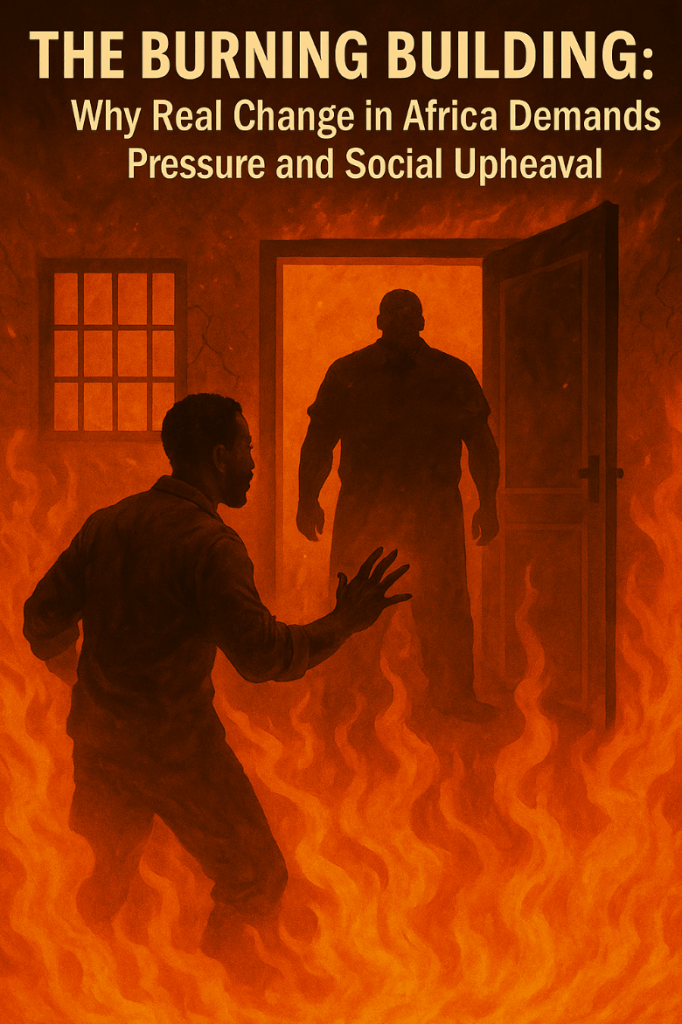
🔥 Africa is in a burning building. The flames are rising, the exits are barred, and the only way out is blocked by a guard who will never move willingly. The question is simple: will we brace for the struggle of liberation, or perish in the fire?🔥
The more I interact with Africans, the more disillusioned I become. Too few grasp the severity of the breaking point that conditions in Africa must finally reach before the people wake up and real change begins. Even the most educated in Africa and in the Diaspora fail to comprehend a hard truth: it is upheaval that is required to trigger the comprehensive reset in many African countries. Too much of our thinking is academic, abstract, and divorced from the harsh realities on the ground.
Let me paint a picture so you understand.
Imagine a man trapped in a room inside a burning building. The windows are locked with iron bars, so there is no escape through them. The only exit is the front door, but a large guard stands there, blocking the way. Every time you move toward the door, he pushes you back, even turning violent. He insists you must remain inside the room. But if you stay, you and the guard will both be consumed by the flames and die. And if you resist and fight, you may die in the struggle. Your options are harrowing: either stay and perish, or brace yourself for battle and fight for your life.
What would any rational and courageous human being do who is committed to liberty?
The only real option is to brace yourself for battle, because survival demands it!
But this scenario is not just a metaphor, it is the exact reality confronting many African countries today. Take Nigeria as an example. In any functioning country, governing institutions should be the arbiters of justice and the last refuge of the people against oppression. But in Nigeria today, nearly every key institution is not only compromised, but has become one of the chief perpetrators of injustice itself.
Executive Branch – captured by a self-indulgent, tribalistic cabal.
Judiciary – corrupted by political interference, riddled with paid judgments and contradictions.
Legislature – infiltrated by self-serving politicians who legislate for their pockets, not the people.
Security Services – reduced to private enforcers for politicians and the wealthy.
Electoral Commission – controlled by presidential appointment, producing compromised results.
Political Parties – operating as pay-to-play platforms, pipelines poisoned by corruption.
Six institutions meant to defend justice, provide succor, and protect the Nigerian people are today crippled by rot. Naturally, good elements still exist within them, but generally they are infected by corruption and have lost their credibility. If these six are the only lawful means of pursuing justice and reform—but are themselves corroded almost beyond repair—then what message is the Nigerian establishment sending to the people?
In plain words: real change can only come from outside the system, through social upheaval that applies pressure to the system and forces comprehensive reset!”
Nigerians face the same choice as the man in the burning room: remain trapped until the flames consume them, or unify as a people and brace for confrontation with the guard.
But let me be clear. I am not calling for war. The “battle” here means social upheaval guided by higher values… an organized, destabilizing pressure that applies force to compel these compromised institutions either to submit to strict order or to collapse, making way for a comprehensive reset. There is no possibility outside of this objective reality.
Africa’s political class do no respect the people, so they must now be taught to fear them. Respect will not come by pleading, nor by theory, but only through the fear of consequences. For most African governments, the path to respecting their citizens runs through the fire of their wrath.
Today, only when African officials fear the wrath of their people more than their selfish interests and the international geopolitical forces that control them, only then will they learn to act consistently in the best interest of the African people.
This respect for the people born from the fear of their wrath will keep African officials in check, and establish a norm of servant leadership that will then enable the natural leaders and visionaries among the people to rise and take possession of government. Those nation-building visionaries whose respect is not born of fear, but of a natural voluntary love for the progress and welfare of their people!
So until African officials can respect their people out of a natural love, they must learn to respect them out of fear of their wrath. But respect must be an established norm!
Yet in this defining hour, too many Africans are still lost in distraction. They debate endlessly, theorize without action, and soothe themselves with illusions. Entertainment, sports, romance, image-polishing, shallow politics, and “influencing”. All have become opiates that provide comfort for the individual, but chains for the collective. None of these distractions will bring liberation and birth a new Africa. None will bend the ruling class. None will save Africa from the flames. So wake up, it is high time for aggressive African nation-building!
Only unity among the people—unity that transcends tribalism, ego, and petty division, and anchors itself in the higher cause of African nation-building—can victoriously engage the fiery metallurgy of struggle. From that furnace, the unified will of the collective will be hammered into firm steel that, when further sharpened by the shared purpose of higher values, will become the Damocletian Sword that will hang inviolably over African leadership…. as a perpetual and threatening reminder that power exists to serve the people, not to enslave them!
Africans must understand: corrupted leaders in power will never relinquish it voluntarily. They must be forced through upheaval. The person gripping a rope will only release it when the pain of holding on becomes greater than the pain of letting go. That is the nature of entrenched power. Titanic pressure must be applied to make holding on unbearable. Only then will the guard give way, the door swing open, and the people finally escape the burning room.
On safe ground, genuine African nation-building can finally begin, not for the enrichment of a tribalistic cabal, but for the collective welfare and prosperity of all. Every true progress demands a real cost. So, African people, will you brace yourselves for the fierce struggle of genuine liberation within and without, or will you remain docile and be consumed by the flames?
The Damocletian Sword hangs over Africa!
~Dr. Ikenna A. Ezealah, Ph.D., MBA Builder of the African Future J.D. Candidate ’25
Among African people, there is too much talking, analysis, and theory of the issues plaguing Africa and what will move it forward. It is wearisome, because it is evident people are not prepared for real vigorous action on ground. All grand ideas and extended analysis remain just words on the internet.
Imagine a group of farmers experiencing famine who gather to analyze the issues of the soil, pontificate about the wind pressure, and enthuse about best practices for planting and yielding the best crops. They feel good, beating their chest with empty pride. But do you know the whole time the soil is unchanged, and the farmers and their families will all eventually perish from hunger… unless they physically ACT.
Africa is the same. Too many Africans are consumed with social media presence, influencing, sounding smart, analysis, publications… meanwhile conditions on ground keep deteriorating. Unlike comfortable analysis, the real action on ground to bring change will be hard, messy, relentless, and a fearsome struggle. There will be heavy costs.
Too much education has convinced an entire generation of Africans that change will follow a “clean sequential democratic method”. But the truth on ground says otherwise.
Let us drop the act and speak frankly: without the physical action of a severe struggle there is no way most African countries will change. Tactically coordinated social upheaval is the pressure that will force a comprehensive reset. All this careful and actionless talking with soft words and curated internet statements will change nothing in Africa.
The qualities that are urgently needed to initiate a reset toward vigorous African nation-building are what I call “revolutionary thunderhawks” who operate with noble aggression and righteous fearsomeness.
There is too much big language and thousandfold academic analysis among Africans today. Yes, careful analysis is necessary and has a time and place, but we have overdosed and gone too far. Using it as a crutch to avoid action.
Now more than ever it is time for action. As I often say we need people in Africa “whose bones are rattling for action”. To take ownership of Africa through a noble struggle that, setting the foundation for aggressive African nation-building, will initiate the next developmental epoch in Africa for the welfare and progress of the African people.
Onward & Upward!
~Dr. Ikenna A. Ezealah, Ph.D., MBA JD Candidate ‘25 Builder of the African Future
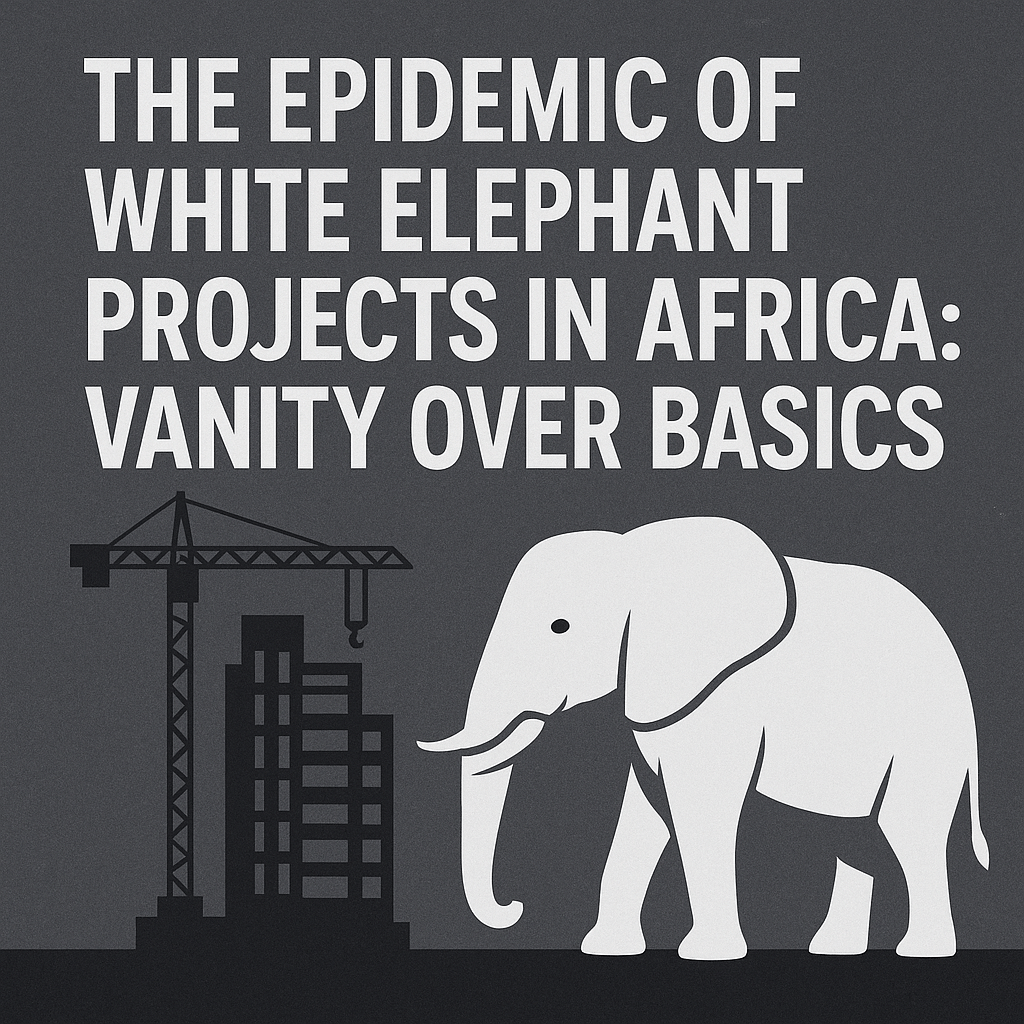
One of Africa’s insidious governance failures is the obsession with white elephant projects (WEPs), which are big, flashy, and often unsuccessful construction projects that add little value but drain national resources.
Take Nigeria’s “white elephant airports”. A Premium Times investigation details how a ₦15 billion airport in Nasarawa State, commissioned in 2015, remains incomplete and dormant. Contracts were awarded, canceled, and re-awarded. Administrations changed. More money flowed. Yet the project remains moribund. And when journalists requested contract and funding details under the Freedom of Information (FOI) Act, officials had the audacity to brazenly ignore them.
WEPs are not real development, but a clever way for many officials to look productive, inflate costs, and steal public money.
Nigeria has 32 airports, but a Nairametrics report reveal that in 2022, five airports carried nearly 90% of Nigeria’s 16 million passengers, while the remaining 27 airports carried only 10%. Such failure of governance shows an unpardonable incompetence and sinister greed.
But this problem is deeper than corruption. It reveals a flawed developmental mindset and even an insecurity complex. Leaders are obsessed with “showy projects” that emulate more developed countries to “prove” Africa is advancing. All while ignoring the basics: clean water and distribution, waste management, reliable roads, stable energy, self-sufficient agriculture, public health, quality public education.
Most African countries have not mastered the basics, yet the people (and diaspora) fantasize about tech revolution, dramatic projects, and fancy silicon valley apps far removed from the immediate needs of the people.
An African nation-builder thinks: Tech relies on energy (plus education). Tech without energy is like harvesting an egg without a chicken. Therefore, energy (and education) FIRST.
Many Africans are in a dreamland, and this delusion reflects in the attitude of their leaders with white elephant projects. So the people get the leadership they deserve. Many African government officials today have not only proven themselves to be useless for nation-building, but are now also pestilential and should be compelled out of office.
Yet there is hope. Across the continent, a new class of earnest Africans are awakening who are committed to real change, who understand that a functioning society is built on basics first, and only then can other advancements be layered on top. It is high time such Builders of the African future step forward, unite, and contest to take over African leadership. Real change will only come when visionaries lead by first focusing on the “boring basics” that support the progress of the African people.
That is the task before us: reject the wasteful delusion of white elephants, and build, brick by brick, the solid foundations of African nation-building.
Onward & Upward!
~Dr. Ikenna A. Ezealah, Ph.D., MBA Builder of the African Future
The rift between Mainland Africans and African Americans is troubling. Each looks suspiciously and accuses the other of ill-treatment, condescension, ancestral betrayal, underperformance, indifference, ethnic isolation and more.
Whining over small matters like children with wounded vanity and false pride. It is a pitiful game of ego and small-minded petulance in which both sides are missing the bigger picture!
Namely, the rift ensures their continued mutual subservience to the same global order that enslaved one and colonized the other, and which still exercises undisputed suzerainty over both through entrenched systems and institutions. Instead of leveraging their strategic advantages and unique strengths for shared advancement toward a high aim, they prefer bickering and licking their wounds.
Both sides live under a sinister delusion that they can advance and reach their potential without the other! However, let me be clear: neither can fully overcome their challenges and reach their developmental potential without working together. You are brothers and sisters, ancestrally derived from the same ethnic groups, separated by tragedy, shaped by unique experiences, yet connected by the blood from the same creative African spirit that still flows through your veins!
Mainland Africans: African Americans technical skills, experiences, and strategic positioning are needed for Africa’s next stage of development. Some of the issues you have can be resolved by your siblings from across the ocean whose help and cooperation you sometimes stubbornly reject.
African Americans: Africa is the headquarters of your identity, your homeland and powerbase. Approach it with humility and make a serious effort to ethnically integrate while avoiding the savior complex. Recognize that in Africa are the minerals, resources, governments, and organizations that can strengthen your economic and political position. Many of the issues you face can be resolved by coordinating with your siblings in Africa from whom you often disassociate.
Will collaboration be easy? No. Will it have great challenges and setbacks? Yes. But it is necessary for the mutual advancement of both parties. Remember that every great aim has difficulties, but it is the unshakeable commitment to the high goal that enables all trials to be successfully overcome!
Mainland Africans and African Americans, it is time to honestly resolve the rift, set aside petty differences and work together for higher aims. We are interdependent, capable of helping each other overcome challenges and advance if we collaborate with openness, respect, and patient determination. We are one people, consanguineously interlocked by the unbroken thread of a common heritage, our destinies are tightly interwoven. Let us focus on higher goals that unites us and move us forward as brothers and sisters!
And remember, no matter how long the prodigal son was away, when he returned to his father, his time apart did not change his place as a reunited son and sibling—embraced without hesitation, restored to family! Remember this and work together!
Onward & Upward!
~Dr. Ikenna A. Ezealah, Ph.D., MBA Builder of the African Future
Nigerian-American Dr. Osatohanmwen Osemwengie, dubbed “the US drone builder”, has 4 PhD’s degrees and 7 Master’s degrees. An academic juggernaut in the fields of Robotics and Engineering, he is an indispensable asset to the US Armed Forces where he has shaped the future of military technology as a master drone builder.
So Nigerian leadership let me understand: You struggle with insecurity, have no weapon production industry, and import second-hand military technologies? All while one of your national sons is abroad, working for a foreign government as a robotics and engineering mastermind, and is behind the advanced military technologies for one of the most advanced countries on Earth?
There are no words that can describe such myopia, incompetence, and wretchedness of such abominable leadership and lack of creative vision in view of the immeasurable talents of the people that are being wasted! As an African Statesman once poetically lamented about the persistent habit of African leadership to squander developmental opportunities: “Even when opportunity drops in our laps, we never miss an opportunity to miss an opportunity!”
If Nigeria assembles just five of the highest performing and innovative diasporans abroad (in governments and private sectors) operating in each of the national development sectors, locally build an industry around them in coordination with local talent, then organize their activities around the execution of a comprehensive national vision, then I say unto you and hereby speak the following truth into the universe:
…in only 15 years (max 20 years), Nigeria will rise to the level of the US and China! And will become the developmental standard bearer and coordinator of the global African/Black People!
This is not an opinion, but an ungainsayable fact of objective reality!
But this requires real leadership and vision from governance committed to aggressive nation-building! Progressive Nigerians and Africans need to take possession of their weak governments and compel a change in leadership to visionaries who are ready to work and action-oriented!
Oh Africa, how great you could be and yet how weak and disappointing you currently are. No more excuses, just stand up and take control of your destiny! The time has now come for real change, so either African leadership embrace aggressive nation-building, or any impediments therein should now be swept of the way!
Onward & Upward!
~Dr. Ikenna A. Ezealah, Ph.D., MBA Builder of the African Future
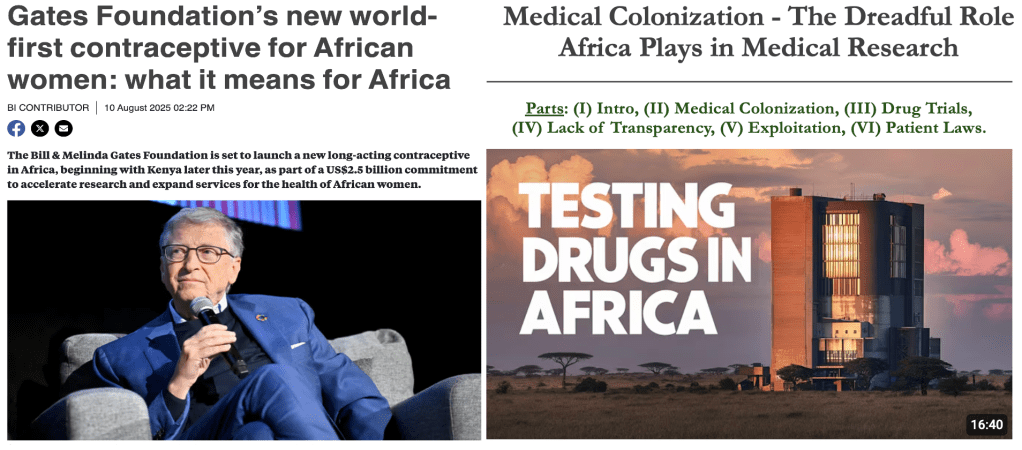
The Bill & Melinda Gates Foundation plans to introduce a new 8-year contraceptive in Africa, starting with Kenya and Nigeria. Designed to be affordable for women in low-income households, the new hormonal intrauterine device (IUD) is inserted into the uterus, where it releases progestin, a synthetic hormone that thickens cervical mucus to prevent sperm from reaching and fertilising an egg. The Foundation is promoting the initiative as a way to empower women and girls in low and middle-income countries with the contraceptives needed to plan their families and futures (Business Insider Africa).
Having summarized technicalities, I will share some reflections:
1) The best way to help African women is by first listening to African women, not imposing what you think is best for them.
2) African women and girls must never be treated as experimental subjects for global health research and innovations.
3) Has every new medical treatment or device being offered to African women and girls first been tested on Western women and girls in the most advanced countries?
Many African leaders, in their usual myopia, docility, and wretchedness stand aside with arms akimbo, while the people whose welfare they are entrusted to faithfully advocate and protect are made the hapless subjects of global health experiments.
Any respectable African leader would swiftly reject and ban such experimental medicines targeting African women and girls. Then, as a teaching point, they should firmly condition any potential future use in Africa on the drug’s prior approval, widespread use, and documented long-term effects among women in Western countries with the strictest medical standards.
But what of the reproductive health gaps these foreign foundations claim to address? Should limited options not justify accepting such experiments? Any African leader who thinks this way should resign from office and vanish into the wilderness. It is the sacred duty of African leadership to create, fund, staff, and grow original African medical and research institutions capable of producing homegrown innovations to solve indigenous needs. Once these institutions are established and thriving, they may partner with foreign foundations—but on African terms—directing them on how best to support those needs. Foreign foundations should supplement local capacity, never supply it.
In relation to this topic, I encourage you to watch the brief documentary “Medical Colonisation – The Dreadful Role Africa Plays in Medical Research” by Simon Whistler. It exposes the dark history and ongoing exploitation of Africa as a testing ground for Western medical advances.
African leaders, either rise to the high standard of visionary leadership and be effective guardians of your people’s welfare, or be replaced in the wind of change to blow across Africa.
~Dr. Ikenna A. Ezealah, Ph.D., MBA Builder of the African Future
A reason African people are easy to dominate is because the natural leaders among the people who should be leading government are too busy in the private sector and the diaspora.
Theorizing, writing, consulting, analyzing, transacting, WhatsApping, LinkedIn-ing, podcasting… basically doing everything but mobilizing themselves to vigorously engage politically to take possession of government and lead.
The capable and educated African “elite” both home and away talk too much and focus energy on everything else besides gaining political power for the opportunity to implement their developmental vision and move their countries forward!
Without political power, all your bright ideas are just words on a page without the power of national manifestation to physically mold the destiny of your people! Without political power, even the best consultant is just a glorified talker who is dependent on those in power to implement their policy suggestions.
After attending many Conferences and engaging the global core group of African “progressives”, talking fatigue sets in! You realize most African Conferences are a waste of time, which regurgitate the same hackneyed phrases and suggestions that even unborn Africans know, or at best they focus on business investments which is mostly about personal acquisition.
Rarely will you find people who are spiritually blazing with a transcendent volcanic heat for African nation-building, whose bones are rattling to strategically mobilize for political action not endless talking. Who are ready to take even 1/4 (one quarter) of the money they would invest in a business to form a political party that becomes the Diasporan headquarters of African progressives and the coordination center with similar nation-builders at home, from which a new generation of leadership can be launched to vigorously contest to replace the current cohort of low-voltage African political leadership in a fearsome struggle!
Form all the businesses you want, but all such businesses remain at the mercy of the political environment controlled by others. And based on ethnicity, religion, and other selfish interests some people can be easily given concessions and licenses so that undeserving people succeed while deserving people fail. Look at all your country’s resources and minerals, at the stroke of a pen they can be given to multinational firms in multi-decade agreements while your people languish.
And all that depends exclusively on who has political power to implement their vision and direct the national destiny! The person on that seat controls and determines, not your bright business ideas and hopes.
African progressives in the diaspora and at home, wake up! I support private sector ventures, but we should no longer avoid the struggle for political power. It is time for political action. Power is never given but taken! Stand up and take control of leadership!


 Nation Upbuilding