You have good intentions, visions, and are committed to African progress and development.
Yes, but are you also carefully studying the Damocletian Sword(s) facing African nation-building? Take heed.

~Dr. Ikenna Ezealah
You have good intentions, visions, and are committed to African progress and development.
Yes, but are you also carefully studying the Damocletian Sword(s) facing African nation-building? Take heed.
~Dr. Ikenna Ezealah
On October 15, 1987 (37yrs ago), Thomas Sankara, then President and transformative leader of Burkina Faso, was assassinated in a coup led by Blaise Compaoré, a close associate. Compaoré assumed the presidency and ruled until 2014, when a domestic uprising forced him into exile in Ivory Coast. Five months after Sankara’s murder, Captain Ibrahim Traoré, Burkina Faso’s current President, was born (March 14, 1988).

Blaise Compaoré has since expressed remorse for his role and asked for forgiveness from the Burkinabe people and Thomas Sankara’s family.
Today, many Africans debate whether forgiveness should be granted and if he should be allowed to return to the country. I believe in the power of forgiveness for healing and the salvation of second chances. However, I also urge African people to consider:
How can this situation be strategically leveraged for effective nation-building? What intelligence could be extracted to strengthen domestic defense operations?
As a condition for considering a presidential pardon or sentencing reduction, Compaoré should disclose critical intelligence, including:
These preliminary are questions that African people can strategically use to extract intelligence from this situation. In exchange, the current government may consider significant concessions. Such intelligence is invaluable, for it would sharpen vigilance and strengthen the defensive foundations of African nation-building.
Onward & Upward!
~Dr. Ikenna Ezealah
Africa needs leadership that provides vision, proper governance, and strategic planning—leadership that enacts policies to incentivize the private sector toward productivity and innovation, while also organizing and coordinating such activities to fit within the meticulous scheme of a broader developmental agenda.
The diaspora, in partnership with locals, should be major players, as they bring technical skills, experience, and capital that are as yet untapped and would help catapult this agenda forward.
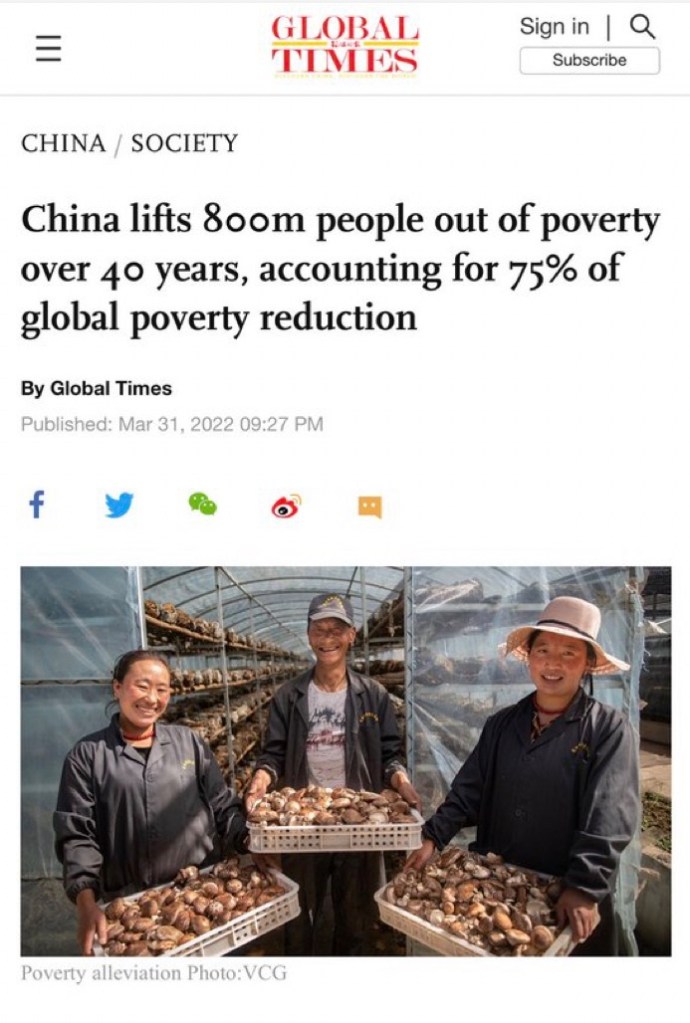
The right people, the right vision, and political will can achieve what seems impossible. Look at China: mired in poverty up until 1970, then through the reforms of Mao Zedong and the economic initiatives of Deng Xiaoping, they achieved the seemingly impossible by lifting over 800 million people out of poverty. For perspective, 800 million is:
-Almost twice the entire population of ECOWAS (~424million)!
-Almost 8 times the population of the DRC (~106million)!
-About 54% of the entire African continent (~1.48 billion)!
Let that sink in and do its work!
Imagine this: just two leaders, Mao Zedong and Deng Xiaoping (supported, of course, by many others), and around 800 million people ascended from poverty—equivalent to more than half of Africa’s current population.
So, don’t tell me that visionary political leadership isn’t essential for Africa’s development today. Without it, the continent is going nowhere! Simply put, in Africa, no amount of private sector activity can fully compensate for the absence of genuine political leadership! Like weights on a scale, both sectors must complement each other and be responsibly balanced for collective progress.
That is why Africans of goodwill today must no longer stand aside, but earnestly organize and mobilize themselves, electorally take possession of their countries, and appoint the best from their midst who naturally embody visionary leadership!
Africa needs a new breed of political lions—leaders who understand the assignment of our time, have a love and commitment to the welfare of the people, and protect their interests. Lions of visionary leadership, ambitious strategic planning, and firm political will, ready to energically drive the wheel of Africa’s development forward!
Onward & Upward!
~Dr. Ikenna Ezealah
During CBC week (Congressional Black Caucaus) that took place in DC from September 9-15, I attended the African Diaspora Day on the Hill. Some notable encounters included Dr. Abike Dabiri, CEO of Nigerians in the Diaspora Commission (NiDCOM), and Ms. Anna Mwalagho, Swahili Language and Culture Lecturer at Howard University.
There is a backstory that made my surprise encounter with Ms. Anna Mwalagho magical. During undergrad at Bowling Green State University, I was Treasurer and then President of African Peoples Association (student organization). As President, I exuded a triumphant enthusiasm in vision-setting, mission-forming, and working with my executive team to design and implement programs to promote the African cause on campus. My organization work was the happiest years of my undergraduate experience!
Here is an excerpt from a 2007 school newspaper about African People’s Association:
Otiso, a faculty advisor for the APA, said he was impressed with [Ikenna] Ezealah’s vision and goals coming into office.
“Soon after being elected president a year ago, he proceeded to share his vision for the organization and what he hoped to accomplish in his tenure as president. I was amazed at his grasp of the issues,” said Otiso.
As president, Anyanwu said that Ezealah has had a tremendous impact.
“People are taking the organization more seriously than in the past. Now we are working with the mission statement in mind instead of being just a social group,” he said.
With a mission focused on educating the public about the real image of Africa, the organization has planned several educational events. The Annual Dinner Celebration on April 17th is the biggest event put on by the APA all year.
https://bgfalconmedia.com/114108/news/bg-news/apa-goals-represented-by-single-growing-plant/
—
And during my tenure as President, the main performer during the Annual Dinner was…. Ms. Anna Mwalagho! She is a renaissance woman with an inspiring affection for Africa.
After graduating I lost touch with Ms. Anna Mwalagho. Then while reflecting on my life during the COVID, a fire awakened within to participate in the post-colonial nation-building of Africa, so the institutions and systems accord with the indigenous heritage of the African people. I then enrolled in law school and set out on the course to be an international nation-building diplomat. After a foundational first year, I transferred to Washington College of Law in DC. Months later, I attended the African Diaspora Day on the Hill during CBC week. There, in a moment of wonder and nostalgia, I again crossed paths with Ms. Anna Mwalagho from my APA days! Life coming full circle.
In College I was just working joyfully as Treasurer and then President of African People’s Association. But in retrospect it appears the experience was a clue to a future life marked with the objective to be a helper and guardian of the welfare and further development of the African people!
Onward & Upward!
~Dr. Ikenna Ezealah
Become what you wish to see in your leaders.
Months ago, I shared that I no longer approach African development issues from the perspective of a civilian reading the news, but rather as if I were a leader of government responsible for addressing them. This mental shift is to train myself to think strategically in an all-encompassing yet practical way, to proactively participate in problem-solving, and to spearhead new solutions and possibilities. It also frees me from the incessant complaining and blaming that characterize many conversations about African leaders, instead galvanizing me to take firm charge in building Africa’s future.
For this reason, I am constantly brimming with visions and ideas about African nation-building, encompassing new directions across various sectors. Only a few of these are publicly shared. After law school and gaining more experience, I could serve as a consultant to African governments on nation-building. Naturally, with appropriate fees.
Today, let us consider Education in Africa—one of the most critical areas in need of revolutionary change. What Africa currently has is a system of “miseducation” or “undereducation.” While I have a more comprehensive proposal for the future of African Education, I will hint at one small aspect here:
African education, in part, should experientially equip citizens with the mastery of all local minerals and resources, using STEM as a means to empower them with the technical knowledge to harness and transform these natural endowments into finished goods for market. Thus, African education should, in part, enable citizens to become “knowledgeable producers and creators of goods and services from their resources and minerals.”
As a classroom aid, just as there is a “Periodic Table of Elements,” there should be a “Periodic Table of Resources & Minerals.” Their names, locations, characteristics, quantities, potential uses, combinations, etc., should be basic elementary knowledge. This knowledge should be experiential, with students learning how to use these minerals and resources to solve domestic issues and advance local development.
In a “Competitive Innovation & Disruption Course” at the secondary level of African educational institutions, an exercise could be called “Tracing Component Parts.” Here, students would trace all major technological developments, breaking their components down into basic minerals and resources that are linked to the corresponding African country (and others). They would examine the cost of these raw materials in the export market, the value addition process, the financial value of refinement, the entire supply chain, the final price as a finished good, the countries and companies involved, how much of that financial share African countries receive, the contracts and quantities involved, and the global policies, institutions, and laws influencing these outcomes.
Next, they would learn how to leverage knowledge and control of these natural minerals and resources to form and implement innovative ideas at every level of the supply-value chain, including but not limited to increasing or initiating domestic production and manufacturing. The aim would be to strategically strengthen African industries (while ensuring mutually beneficial arrangements) in order to maximize domestic revenue and competitively gain a much larger global market share of the technology for the African country.
This is just the tip of an iceberg in a whole ocean of ideas about African nation-building, encompassing new directions in various sectors.
Onward & Upward!
~Dr. Ikenna Ezealah
Years ago, when I read the African Continental Free Trade Agreement document, the last paragraph surprised me:
“WE, the Heads of State and Government or duly authorised representatives of the Member States of the African Union, have signed and sealed this Agreement in four original texts in Arabic, English, French, and Portuguese languages, all texts being equally authentic.”
Not one of those languages is originally African! A document meant to represent African interests is not presented in an original African language. Do you see the linguistic confusion in Africa today?
To develop as a unified body, Africa needs a common indigenous language as a unifying element among its diverse peoples and ethnic groups. Genuine cooperation, strategic alignment, mutual understanding, and policy coherence, which facilitate economic development, assume simplicity and ease of communication. Africa cannot claim this today.
If you study the development of both historical and modern world powers, one common element that facilitated their growth was linguistic homogeneity. Even when different languages and dialects existed within their borders, one primary language guided them. Africa lacks this.
Today, Africa is linguistically similar to the Tower of Babel—a mixture of hundreds of local languages and dialects beneath a handful of colonial languages. In an African country, some speak the colonial language, others a broken mix of it and a local language, and still others speak only the local language. Multiply this across all African countries! What you have, in the final analysis, is linguistic chaos ripe for divisive tribalism.
Despite this, policymakers are attempting to unite Africa through policy initiatives. But what is the chance of success? How can one African truly empathize with another when they cannot even understand each other?
Real leadership demands that hard decisions be made. The African Union should take the lead, and with the cooperation of the Ministers of Education, a chosen language should be taught in all African schools starting from primary education. I am not proposing “linguicide,” as all other languages would remain intact, learned, and culturally passed on to future generations. Nor does this chosen language imply “superiority”; it is simply a means of collective cooperation. All egos, tribalism, and emotions must be put aside, and leaders must be able to make this decision objectively, without regard to ethnic affiliation—a tall order today!
Africa is still linguistically colonized and cannot fully develop as a united body so long as a local language (or a few) is not primary, and European languages remain its main form of communication. Instead of just one, each region could adopt a common language, resulting in five main African languages!
Africa needs a common language (or basket of languages), so its people have a true medium to promote unity and collective progress.
Onward & Upward!
~Dr. Ikenna Ezealah
Observing this Chinese Political Scientist speak, do you see how much pride he feels when he authoritatively speaks of China’s development and rise from an agrarian society to an economic behemoth? And how this commands silence from other professionals?
Who among the global African people can boast the same of Africa today? We must struggle today for the burning pride of realized growth as a people! The pride of facing centuries of setbacks and oppression and still soaring to luminous developmental heights like a phoenix!
Africans cannot fully gain that unflinching pride and confidence as a people unless they build something indigenously unique in Africa today, whose beauty and refinement matches and even exceeds foreign developments! Until then, there will always be a lingering doubt in the intuition of the African that needs to either look back to ancient glories to justify itself or look overseas at Africans doing big things in foreign countries! The latter deserves recognition, but it only reinforces the notion that you could only achieve greatness through foreign systems and societies… not yours!
China also boasted of a rich ancient history! But the world mocked: “If you were so great in ancient times, then prove yourself in the modern era!” Under Deng Xiaoping, who became paramount leader in 1978, China responded by initiating revolutionary economic reforms that catalyzed their transformation into the behemoth we see today! The ancient dragon of China resurrected and silenced all doubt!
Now Africa, the world smirks and mocks you as being a developmental pariah! What is your response? Debates of slavery and colonization are losing their luster! Valorizing ancient African glories has value, but those were achievements of our ancestors, we in the modern era must prove ourselves! The Law of Universal Movement demands continual proof of capacity through constant progress and development! Onwards, ever onwards must be the forward drive to prove ourselves ever anew!
Only applied potential and realized capacity that brings a new standard of excellence through ennobled indigenous developments will empower African people with radiant pride and confidence, and also silence the mocking and doubts! Only deeds and original accomplishments as a people will do this!
Builders of the African Future, there is absolutely no other way to achieve this but through diligently harnessing the immense talents and capacity of the global African peoples, then strategically applying its unified power in the organized framework of a developmental vision that unleashes Africa’s modern potential and gives the world a marvel to behold! No matter how daunting the challenge, let us stand up courageously and brace ourselves to meet it as a united force for the transformative good! For Africa can and must rise!
…Hence the call to nation-building!
Onward & Upward!
~Dr. Ikenna Ezealah
A CONTEXT
Currently the global African people are not united and lack a common symbol that would help to create a sense of collective unity. By global African peoples I mean Africans in Africa, the diaspora, and Africans who left via the slave trade and are now citizens of independent countries. Collective identity and meaning are important prerequisites for unity and cooperation for the global African peoples, and cultural or national symbols are powerful aids to fostering this sense of unity!
ISSUE:
Currently the global African peoples celebrate different independence days, based on when their different countries obtained independence. The global African peoples do not keep up with the plethora of dates, and many end up celebrating only their individual country’s independence or at most a few other countries. This leads to a fracturing among the global African people’s, who often do not really internalize the independence celebrations of another African country/people or relate it to their own heritage and history.
THE QUESTION:
What is one creative way that independence day celebrations can be strategically harnessed to foster a greater sense of collective unity among the global African peoples?
A SOLUTION (one of many)
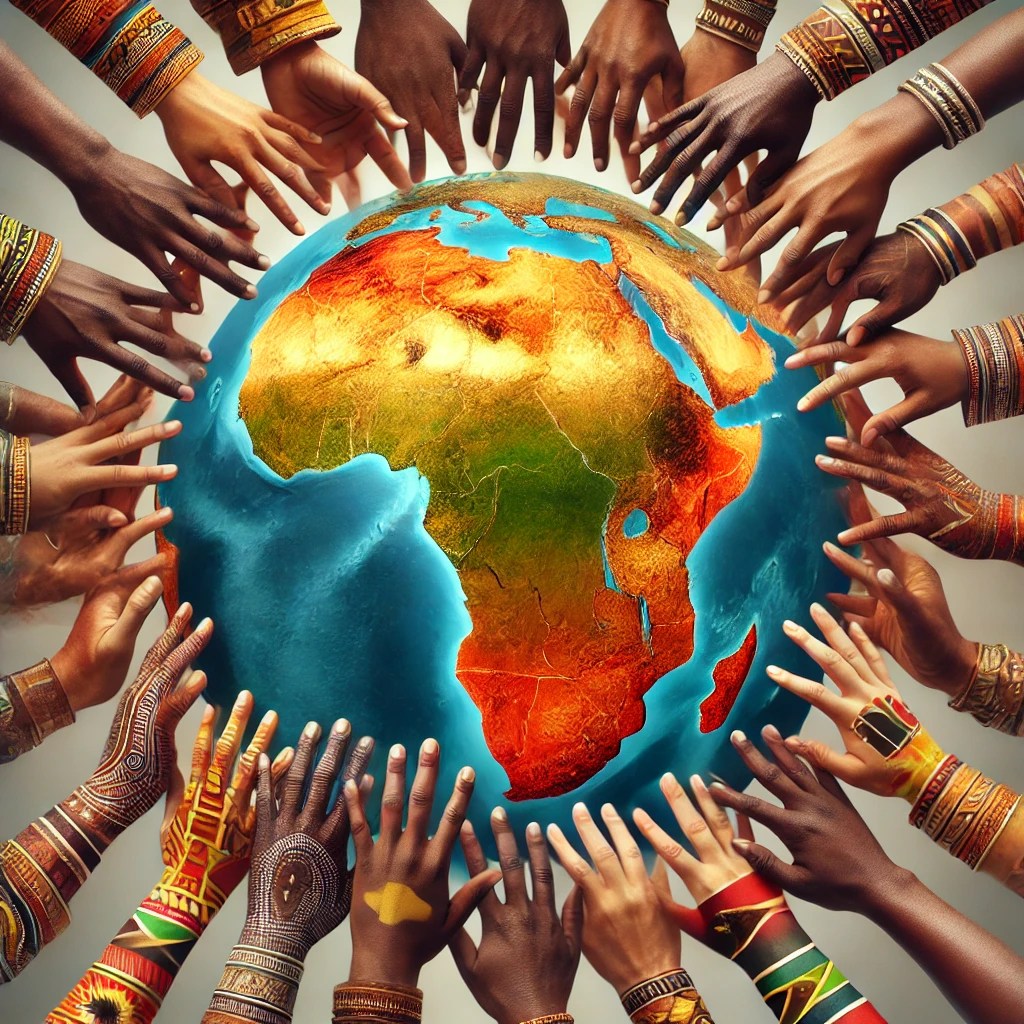
I propose GAPID: “Global African People’s Independence Day.” A commemorative day when the global African people’s across all African countries, the Caribbean, and the America’s celebrate a day of collective independence. A day when all historical sons and daughters of Mother Africa unite as one people, raise different flags only as part of a broader mosaic of the global African peoples, celebrate commonalities, shared experiences, but also our unique evolutions and transformed identities that are beautiful feathers of the same bird. A day when we stand as one people, looking to the past, present, and future!
WORD OF CAUTION
The proposal would need to be carefully enacted with other proposals, so we avoid the danger of making the contemporary history of the global African peoples associated with slavery and colonization the primary marker of their collective identity! For the African peoples have a rich history of cultures and kingdoms whose elements would need to be factored to broaden the scope of the proposal.
CLOSING
The Osagyefo Kwame Nkrumah forwarded “Africa must unite!” Here, the proposal of GAPID – Global African People’s Independence Day seeks to advance that vision! Thus, I also call for the formation of GAPCON: Global African People’s Council of Nations, and the creation of a corresponding flag!
We must no longer stand aside and passively hope for a brighter African future, but with gaze focused upward and daring vision we must boldly spin the wheels of development forward! While diligently using our God-given abilities to energetically forge the African destiny into reality!
One Africa, One People… Focused Upward, Forever Onward!
~Dr. Ikenna Ezealah
During our visit to Ghana, the Garvey-Nkrumah Global Legal Fellows—led by Professor Woods of Howard University Law—visited the Jubilee House, the presidential palace in Accra that serves as a residence and office to the President of Ghana.
The Garvey-Nkrumah team of diaspora legal professionals representing institutions from Africa the USA, and Caribbean, then convened with President H.E Nana Addo Dankwa Akufo-Addo, and Mr. Akwasi Awua Ababio—the Directorate of the Diaspora Affairs Office of the President. This meeting centered on Ghana’s diaspora engagement efforts, including the Diaspora Engagement Policy—a flagship initiative launched on December 13th, 2023, which serves to coordinate the activities of various institutions to engage Ghanaians abroad effectively. The Diaspora Affairs Office emphasized the importance of involving the diaspora in national development and leveraging their resources for mutual benefit.
Enclosed are pictures of our visit to Jubilee House with the President of Ghana, which can be viewed on the official Instagram of The Office of the President of Ghana, Diaspora Affairs at the following link.
What a great opportunity and privilege to meet the President of Ghana, the Director of Diaspora Affairs and other governments officials, listen to dialogue on policy initiatives with global implications, then have engaging side chats and make connections! The experience was incredible… I look forward to more!
Onward & Upward!
~Dr. Ikenna Ezealah
A CONTEXT
To develop their countries, African governments must become geopolitically agnostic between East and West, and refrain from being entangled in the historic or current ideological positions of either side. Instead, they must focus exclusively on achieving rapid economic development by taking advantage of the increased market and investment opportunities. More multinational firms with similar skillsets means everyone can be substituted. This gives African governments leverage during negotiations if they can use it.
I will give an example how this can be achieved in the awarding of government contracts to multinational companies!
THE ISSUE
When African governments sign contracts with multinational companies for resource/mineral extraction, a seldom discussed problem is the underreporting of minerals excavated, altered business figures and price points, lack of transparency, and even third-party smuggling. The result is enormous losses of needed revenue year-to-year. To be fair, officials are frequently complicit.
THE QUESTION
How can African governments start creatively addressing these issues of underreported extracted resources/minerals and altered figures by multinational companies? Here are only the broad outlines of an idea.
A SOLUTION
Contracts for mineral/resource extraction should have two companies, preferably from geopolitical rival countries. One does the mining (e.g. Chinese), and the other is paid to directly monitor and audit the mineral quantities and monies/books (e.g. US). Next, as both foreign companies would establish a domestic subsidiary, the contract would require two groups of skilled diasporan professionals from the private sector of the host African country to own a percentage of both companies, and directly work in their management in the performance of the contract.
The activities of both companies on the contract (owing to the geopolitical rivalry) would produce a checks and balances of information. Also, the placement of skilled diasporan professionals in the ownership and management of both companies ensures a transfer of knowledge, and access to insider information of both activities (mining and auditing).
REFLECTIONS
African governments must be strategic and use the geopolitical climate between West and East to facilitate their own national development agendas. Yet they should be fair, transparent, and trustworthy in the performance of all contracts to ensure there is collective benefit to all parties! Remember, both East and West need African resources and minerals, and initially during independence many African countries lacked and needed their technical expertise. But today many African countries have the technical expertise… only it is slumbering in their scattered diaspora and just requires vision, strategic organization and coordination to be tactically harnessed for investment initiatives to achieve rapid economic growth!
~Dr. Ikenna Ezealah


 Nation Upbuilding