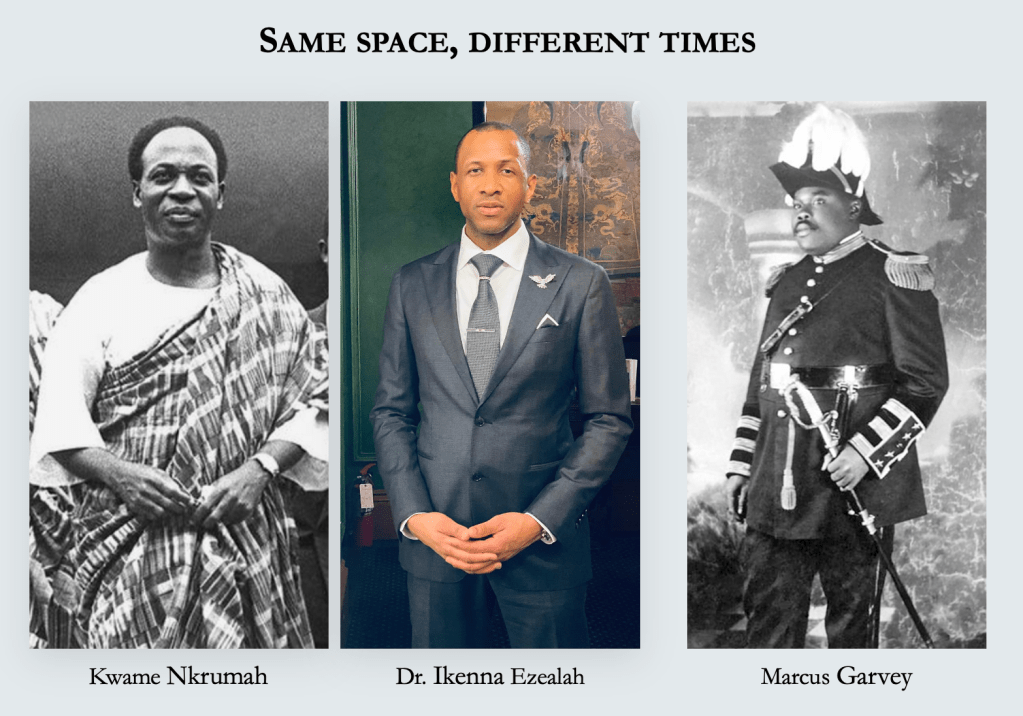
When Eagles Follow Chickens

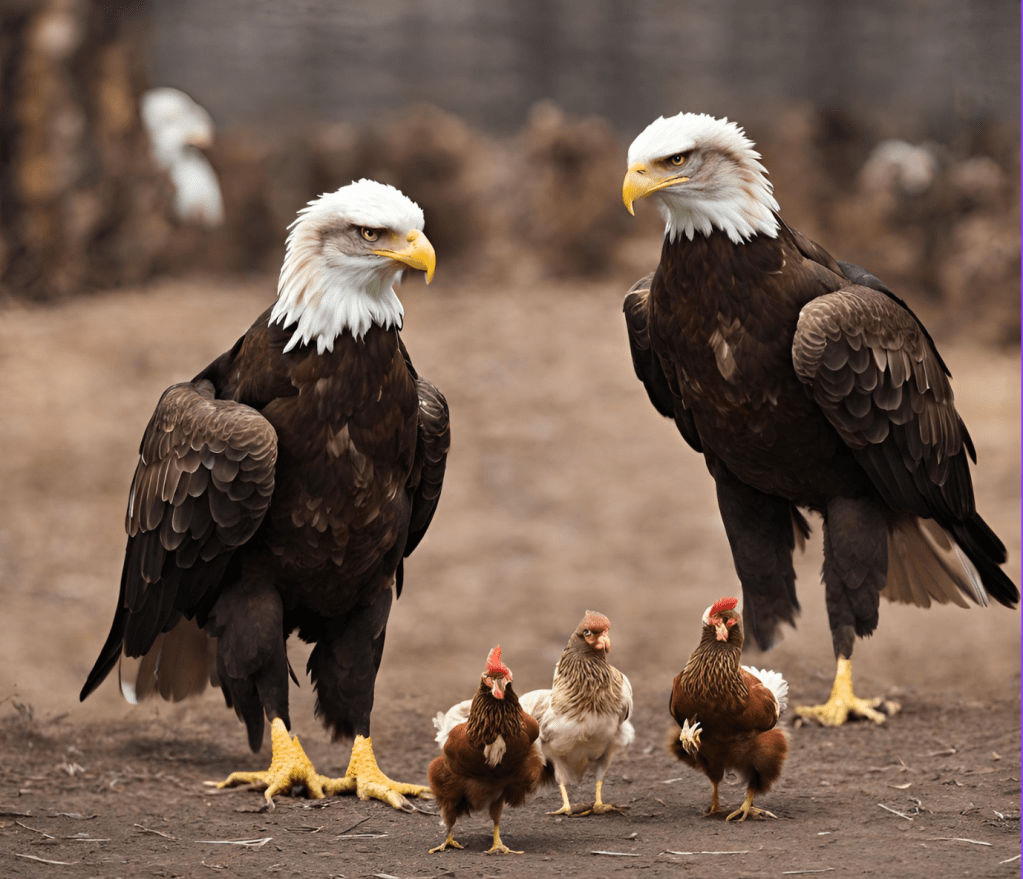
One day, a group of eagles who wanted to fly held an election and decided to follow the leadership of chickens. The eagles looked at the chickens and observed they were both birds, both have feathers, both have beaks, both can flap their wings… and so concluded the chickens were suited for leadership and can go skyward! Before long, the eagles noticed the chickens preferred walking on the ground, and always had a clever reason why they could not fly that day. “Maybe tomorrow” they would promise. Tomorrow would come, but along with another excuse.

Soon the eagles grew restless, which turned into frustration, then anger. The Eagles started lamenting and blaming the chickens for their earthbound condition. Yet, none of them stepped forward, and they continued to obediently follow the chickens. Despite their vexation, the eagles were to blame for ignorantly following the chickens and expecting them to display the qualities of eagles.

Eagles following the leadership of chickens is the tale of African people and their “leaders” today.

Holding office does not make someone a real leader, anymore than having wings does not automatically give the chicken long-range flight. However, most people who hold office today in Africa are erroneously called “leaders” by citizens who follow them, even though most are merely occupiers of office with no real vision. Yet citizens somehow expect development and nation-building… just like the eagles expecting flight from the chickens. But they will all stay on the ground until the eagles take the lead.

Yes, chickens have wings, like the “leaders” have minds, but in practice it is mostly limited. All the chicken can do for flight is momentarily levitate at the sight of some challenge, only to quickly return to the ground, to the dismay of the eagles. Similarly, the mind of most “leaders” in Africa flaps around and pretends to fly (somewhat expand with ideas) momentarily during election season, only during post-election to quickly retract back to its self-imposed limits, to the dismay of citizens. You see, chickens can only peck on grains and tidbits on the ground, just like many “leaders” can only peck on profits from exporting raw material tidbits from the ground, but cannot use them to create original value for the progress of the people.

People of Africa, why are you wasting energy blaming and expecting more from many in the current group of “leaders”, when you can tell a bird by its feather? It is not that the chicken needs to change and give more effort, but simply it is not an eagle!

Eagles, i.e., natural leaders with ability in Africa, must step forward, form a homogeneous flock, and take the lead in all matters in Africa. Otherwise, if eagles keep following chickens on the ground and following its diet, the law of adaptation in nature will cause the eagle to lose its ability to fly… just like it did with other now earthbound birds, including the chicken.  

Natural leaders among the people in Africa, stop complacently following the status quo and step forward to lead the people to higher goals, for the creative abilities of the people are wasting away under the scourge of current “leaders”. Eagles press for flight and need the panorama of the open skies. Similarly, the inherent abilities of real leaders actively charge for the continuous progress and development of their people, and collective nation-building… with a panoramic vision of present and future possibilities that comes from on high!

Eagles of Africa, it is high-time for those who carry the natural ability and call for leadership of the people, and whose hearts are filled only with the strong desire to serve and uplift …step forward and fly!

Eagles of Africa, destiny calls you to service!

~Dr. Ikenna Ezealah

Seven nation-building Suggestions For African Governments To Use During Contract Negotiations With Foreign Companies

There is a common notion that African governments do not have much leverage when negotiating contracts for the extraction of special minerals, resources, or development projects, because foreign firms have almost all the technical expertise the African government needs. 

But this notion is not true. So if it was Pinnochio’s nose, it would grow enough inches to poke the moon, just to boomerang back and shake the earth. 

This pervasive notion can only take root when the official or citizen lacks a universal vision of the collective capabilities of African citizens (at home and in the diaspora), and lacks insight on how to strategically harness them during contract negotiations to promote nation-building at home. 

Foreign companies, no matter how it first appears, do not possess all the technical expertise. There is one equalizing factor here: the collective power and experience of the African diaspora. If you look at every industry and sector in the U.S. and Europe, no matter how specialized, you will find 1st and 2nd generation Subsarahan Africans (primarily West Africans) among the most experienced and accomplished in that profession. The mass exodus of Africans called “brain drain” can be viewed differently: Africans abroad have now gained the knowledge, expertise, and technical capabilities of those societies. The only thing missing is organizing, coordinating, and adapting them for indigenous nation-building! Thus, what would happen if a visionary government organized and coordinated these collective capabilities and strategically applied them? 

Here are only a few suggestions (of many others) for African Governments to use during contract negotiations. These suggestions are not exhaustive, and each requires a whole series of essays to be built into a detailed framework for practical application. Hence, the suggestions here are only meant to give a general sense of the idea.

  1. Request for Capability (RfC): African governments should establish a continuous Request for Capability (RfC) bidding platform. In the West, governments issue RfP’s (Request for Proposals) that allow private sector companies to bid and service government contracts. RfC’s is a similar concept, but it is a continuous open recruitment for African governments to recruit Africans in the diaspora with technical capabilities to join government contracts with foreign companies, but also to fill the African governments needs to implement a national development strategy. 
  1. Fifty percent (50%) of Contract Governance: In the contract negotiations with the foreign company, the African government should require that 50% of all top and mid-level managers must be African for the contracts execution on African soil. The African government will then access highly qualified candidates through the issued RfCs platform, and recruit African technical experts abroad (but also domestically). After a strict meritocratic vetting process, the candidates will be chosen to fill the 50% requirement of top and mid-level African managers. The contracts will be both long-term and short-term. There are many African professionals who take sabbaticals to undertake projects back home because they want to give back. The RfCs would provide an open window of opportunity for the repatriation of Africans.  The 50% requirement will ensure continuous knowledge transfer between the foreign company and African citizens. Also, when the mining of precious minerals and resources is concerned, it means African citizens will have direct access to all records and processes, in order to vet the official quantities of excavated minerals and resources the firm discloses, and also oversee its distribution and shipment.  
  1. Irrevocable Payment Escrows (IPEs): Many Africans in the diaspora need guarantees to return home to work. So to make the RfC offer credible and lower the risk for Africans in the diaspora who accept it, African governments need to establish through legislation the use of “Irrevocable Payment Escrows”. IPEs is a term I created, and the concept is similar to “irrevocable trust accounts”. The payment for the recruited African citizen for the contract’s duration would go into the IPEs at the beginning of the contract. The legislation would state that, once monies are deposited into the IPEs for periodic disbursements to service the contractual compensation terms of the African citizens, the African government forever loses all claims and can never recall the funds back, even in a time of national crisis. Thus, the Africans in the diaspora would be paid through the IPEs and not have to deal directly with the government. 
  1. African Rating Agency/ Chamber of Commerce: African governments should form an organization (African Chamber of Commerce) responsible for organizing, rating, and ranking an interactive list of the top African owned businesses across all sectors. Ranking metrics can be developed from data gathered through a strict research process according to size, quality, revenues, customer service, culture, value addition etc. The interactive list of “Top 10 African companies” is strategic for nation-building and contract negotiations. How? When negotiating with a foreign firm for a government contract (e.g. the extraction of a mineral), if there are logistical or technical hurdles with using the RfCs, or if the African government prefers an organization instead of individuals, they can choose an African company from the “Top 10” list to join in the performance of the contract and gain rights to 50% of the profit and administration. Naturally, the African business must satisfy all terms of the contract just like the foreign one. The RfCs and conferring 50% of business rights to a Top 10 African company ensures the continuous transfer and reinforcement of technical capabilities. 
  1. The 20-80-20 Goal: African governments must move away from being exporters of raw materials, to refining and producing finished goods that bring a multiplicity of economic value addition. Continentally, I propose a strategic goal of 20-80-20. The proposed goal for every African country is that by 20 years, 80% of all raw materials will be refined and produced locally into finished goods, while only 20% will be exported as raw materials.  Thus, in contract negotiations, African governments must advance this goal by requiring the foreign firms to build local factories to refine and produce the raw material in Africa, and thus create jobs for Africans. For the firm, 80% of the excavated raw material would be produced locally in the factory, then 20% may be exported. African governments must be earnest about the term to build local factories. Naturally, some incentives should be given to make this feasible. However, the African government should ensure the product or service is culturally adapted to the needs of the people, and that policies are in place to protect a monopoly of dominance of local markets by a foreign company. 
  1. Community Education Programs (CEPs): A term of the contract should require foreign companies to establish “Community Education Programs” (CEPs) through the local factories. CEPs would be a structured and experience-based program where the foreign firm would be required to educate the locals about all technical processes related to their industry. From sourcing the raw material, its various capabilities and application, the process of refining it to a finished good, packaging, distributing, selling, and shipping. Locals can enroll for a small fee that can be subsidized by the government. The purpose is to ensure continuous knowledge transfer through theory and experience to the locals in the community. Also, it is another creative way to educate your citizens through a business contract. If foreign firms wish to extract raw materials, they should also be ready to give value to the locals. African citizens should always have the opportunity to gain knowledge of the treasures in their environment, and thus how to harness it.
  1. Reinvestments & the 25-10 Threshold: African governments must never pay a foreign or local firm with foreign currency, but use only local currency. Sometimes, capital flight is a problem in Africa whereby most of the profits a firm generates goes overseas to their original country headquarters, then the African country loses the opportunity for strategic reinvestment into the economy. Here, a leader must counteract this for nation-building. The contract should require the establishment of a local bank account by the foreign firm, and that 25% of annual profits must remain in the African country. Furthermore, that 10% of annual profits remaining in the country must be reinvested annually in a local company or project. 

These are only a few of many other nation-building strategies. African governments now have great leverage when negotiating contracts with foreign companies. The purpose should not be to extort, but to be fair so everyone gains value. As a government with the duty to safeguard the African people’s welfare, officials must start thinking in a far-seeing manner, and must ensure every contract with a foreign firm yields multiplicity of benefits for the Africans citizens (also value to the firm). To achieve this, the government must set aside selfish interests and truly wish to further the development of its people. The government must leverage the collective capabilities of the diaspora to level any imbalances in negotiation, and have the humility to ensure these RfCs and Top 10 list are not corrupted by nepotism and tribalism, but that the most qualified truly wins the opportunity. 

African governments must move away from the attachment to immediate gains by mainly exporting raw materials. A farmer who is proud of getting pennies for his seeds is blind to real opportunity, for he overlooks the hundreds of trees, thousands of fruits, and millions of new seeds his original seed would produce…if only he reinvested it! Such is the case with African governments. The myopicness to capitalize on small gains for exporting raw materials makes them blind to the loss of the greater opportunity of national value addition that comes through the process of locally refining raw materials into finished goods, then exporting them into the world economy. Hence, the suggestion for 20-80-20, and also the Community Education Programs (CEPs). These are just a few of an unlimited number of possibilities! We must open our minds and release our creative capacity through the good volition to help and uplift the people!

These terms might seem onerous, and that firms would not agree. However, remember we now live in a multipolar world where there are many options. When global powers compete against themselves for inroads into Africa, African governments have a strategic position to advance terms that will benefit its people. No country today holds a monopoly on technical expertise on any issue that is needed for national development, so the options are profuse. Additionally, when you take the collective capabilities of the diaspora into account, then you realize African governments are uniquely positioned and have a golden opportunity they are missing through short-sightedness. To harness this opportunity for genuine nation-building requires five things: connection upward, vision, strategy, organization, coordination. 

As we nation-build, we must never forget to look upward and seek guidance from above. If the visions, strategies, and ideas expressed in my works are furthering and galvanizing, then I must acknowledge the Grace of God’s Power that allows these inspirations to flow through me for the service of nation-building that furthers the genuine welfare of the people. The worst thing a servant can do is take credit for the gift His Sovereign delivers through him, for then his conceit will soon disconnect him with the Helping Power from Above. And with this, the continuous inspirations and enthusiastic strength required to serve will harden, and in time be altogether lost. Thus, I look upward thankfully to the Almighty for all inspirations big and small I am permitted to receive, so that the Grace of His Power will continue flowing through me and others to serve His purpose in nation-building. And in this way, become a true helper and guardian of the welfare and further development of my people.

~Dr. Ikenna Ezealah

Suggestions to Modify Nigeria’s Constitution: INEC (Part 1)

Section F: The Independent National Electoral Commission (INEC)

Schedule III, Part 1, Section F of the amended 1999 constitution of Nigeria confers the powers to organize and supervise all elections on a body called the Independent National Electoral Commission (INEC). Despite many improvements in conducting elections, this body has many structural inefficiencies that has frustrated many Nigerians. The debacle of the recent 2023 elections was for many “the straw that broke the camel’s back”.

Many Nigerians are calling for reforms. Here, I wish to contribute only a suggestion for the structural transformation of INEC on the federal and state level. These suggestions are only a few of many, and I have intentionally avoided detailed explanations, otherwise it would be too pedantic for public consumption. I share these ideas to encourage legal creatives. The ideas are not meant to be exhaustive, but just to give a general sense, for the full body of expatiated ideas for the modification of the Nigerian constitution will be shared incrementally in the time to come.

Under Section F (14) The President appoints the Chief Electoral Commissioner, the twelve (12) other Electoral Commissioners, and the Resident Electoral Commission of each State of the Federation and the Federal Capital Territory of Abuja.

-The constitution should be amended to strip the president of the powers to appoint the head of INEC. It is a violation of checks and balances for a sitting President of a party to determine the head of the electoral commission, and also the other electoral commissioners of the federation. Previous experience has shown this leads to party politics and the premature calling of elections.

Instead, I propose an entirely new structure. INEC should be divided into three independent branches for efficiency and effectiveness: Policy, Implementation, Investigative. Think of each branch like interdependent federal agencies.

  1. Policy branch: Responsible for setting election policy and rules for the next cycle.
  2. Implementation branch: Responsible for the implementation of election, staffing, coordinating, supplies, collating results.
  3. Investigative branch: Responsible for investigating any election irregularities immediately post-election.

Each branch will have specialized roles (pre, during, and post elections), procedures, timelines, and methods of appointing Head Officers, and staff.

For example, I propose the following on the National Level for the nomination of Branch Heads:

-The Head Officer of INEC’s Policy branch, and four members of the National Electoral Commissioners, should be nominated by a counsel of three members from the majority party (one of which can be the President) from the Nigerian National Assembly.

-The Head Officer of INEC’s Implementation branch, and four members of the National Electoral Commissioners, can be nominated by a counsel of three member from the third largest party (one of which can be the head of the party) of the Nigerian National Assembly.

-The Head Officer of INEC’s Investigative branch, and four members of the National Electoral Commissioners, can be nominated by a counsel of three members from the second largest party (one of which can be the head of the party) of the Nigerian National Assembly.

If the Counsel appointing the Head of the Policy branch cannot reach an agreement within thirty (30) days of convening, then the President’s (or the authorized representative of the majority party) nomination will be binding. If the Counsel appointing the Head of the Implementation branch cannot reach an agreement within thirty (30) days of convening, then the Head of the minority party’s (third largest in Assembly) nomination will be binding. If the Counsel appointing the Head of the Investigative branch cannot reach an agreement within thirty (30) days of convening, then the Head of the minority party’s (second largest in Assembly) nomination will be binding.

The nominated Officer will need just a simple majority to be confirmed.

Under Section F (14.3) The President can also appoint the Resident Electoral Commissioner of each State of the Federation and the Federal Capital Territory of Abuja.

The constitution should be amended to strip the President of these powers, which are too far-reaching. In practice, this provision has given the President undue influence in State politics. Instead, I propose the same structure for the appointment of Federal INEC Commissioners, but on the state level.

In each State of the Federation, you would have the state-level branches of the Policy, Implementation, and Investigative branches.

-The Resident Electoral Commissioner of the Policy branch should be appointed by a counsel of three members from the majority party (one of which can be the Governor) of the State National Assembly.

-The Resident Electoral Commissioner of the Implementation branch should be appointed by a counsel of three members from the third largest party (one of which should be the head of the minority party) of the State National Assembly.

-The Resident Electoral Commissioner of the Investigative branch should be appointed by a counsel of three members from the second largest party (one of which should be the head of the minority party) of the State National Assembly.

As it is on the Federal level, with the Counsel’s lack of consensus and the timeline for agreement, so will it be on the State level. Here, the Heads of the largest three parties in the State Assembly on the various counsels (or an authorized representative) will cast the binding nomination if the allotted timeline is exceeded.

Again, as in the Federal level, the nominated Officer will need just a simple majority to be confirmed.

Federally, the President will have no power to compel elections to be called, and no election can be called without the signatures of all the Heads of each branch on the Federal level. All three must gather and also give a verbal confirmation of their authorizing and finalizing the results on a live televised session. The inference is that the Head Officer of the investigative group must confirm his branch has investigated and reconciled alleged irregularities and must provide evidence of this reconciliation. The evidence must be publicly available and documented in a Green paper (not white paper). There would be a verification process and strict timeline for this procedure that cannot be elaborated here, also contingencies to prevent gamesmanship and each branch from stalling important decisions. There are many points and specifics to mention for each group, and many other sections of the constitution in general. More details will be forthcoming in future essays.

But changing the constitution, the powers of government, the structure, procedure, timelines etc. is necessary as a precondition for Nigeria to move forward. The 1999 modified constitution as currently exists should be recalled. A new governance structure that reflects the present realities of Nigeria, and makes it possible for government and citizens to cooperate more dynamically, should take its place.

Thus, I call for a constitutional convention.

~Dr. Ikenna Ezealah

Do African Governments Need Foreign Financial Institutions When They Have the African Diaspora?

African governments have been pressing for greater influence in the IMF and World Bank, and even lobbying for a restructuring of the global financial architecture in relation to these institutions. However, why do African governments feel they need these institutions when they have an untapped reservoir: the economic power of the African Diaspora!

If institutions do not give you a seat, just create your own table. I will illustrate my point using the 2022 African diaspora remittances compared to loans and grants by these financial institutions. A few qualifiers:

-Between 2020 and 2022 the IMF provided more than 50 billion dollars to the region, so I put the figure of $25b for 2022 to be generous.

-I calculated the AfDB figure by adding all the loans and grants publications from 2022 on their website.

2022 African Diaspora remittances: ~$100billion

2022 World Bank loans: ~$30.8billion

2022 IMF loans: $25b

2022 AfDB loans and grants: $3.5b

Based on these figures, the estimated total remittance of the African diaspora for 2022 is double the total loans and grants given to Africa by the World Bank, IMF, and the African Development Bank combined.

Yes, give that epic realization a few moments to sink in and do its work!

Currently these remittances are dispersed, but what would happen if African governments harnessed and targeted them for development and nation-building? The AfDB has started exploring such possibilities. These remittances do not even account for the vast economic power of Africa’s wealthy citizens aboard who could pool money to fund special investment initiatives in Africa if the financial structure and safeguards are put in place.

It is lack of transcendent leadership, strategic vision, and disciplined governance in Africa that fails to think in an all-embracing manner and energetically harness the resources of its African citizens in the diaspora. The African diaspora is wealthier than these institutions combined so Africa does not need these institutions, Africa has only been taught to believe it does.

What Africa needs is proper leadership that looks deep within, forms a strategic vision, and employs its own physical, human, and economic resources to realize the vision. To do this, African governments and institutions must first be repossessed by genuine leaders committed to higher values and indigenous progress who govern for the welfare and development of the people.

African governments, remember the economic power of your citizens in the African diaspora. Stand up and take control of your own destiny. You have everything you need within your own spirit, the African continent, and among your people. You only need to harness it.  

~Dr. Ikenna Ezealah

*Picture sourced from Pew Research Center*

The African Issue

Many overanalyze the issues facing Africa, make effects into causes, and try to treat symptoms without focusing on the root issue with the most far-reaching consequences.

The most fundamental issue facing Africa today is simply that leadership, power, and governance are in the wrong hands. Most who have shared office since the wave of post-independence coups, including “elected” officials today, simply lack the vision, ability, and capacity to lead the people in genuine nation-building.

Every initiative, program, policy, and national strategy by domestic and foreign institutions, will either always fail or be limited in the scope of its success unless governance and power returns to the hands of those endowed by Nature with the natural ability and vision to lead the African people.

When a home lacks parental leadership, children can never supplemental the void because they lack the ability and maturity that Nature assigned to parenthood which is needed to provide order, guidance, and support for the collective development. Despite best efforts by the children, the woeful gaps and disorder will become apparent in all domestic processes. The same with Africa today in all institutions. The wrong people are in office, and those with natural leadership ability have either left or in most cases are just quietly pursing a mundane life of personal success.

The other issue are coups led by people who see the issues and are filled with the genuine desire and energy for real change. But the problem is that in almost all cases, these coup leaders might have the enthusiasm and energy, but they lack the genuine vision and ability to lead comprehensive nation-building! The force required to change, is not the same as the vision and strategy to guide lasting change. Thus, despite the genuine will, most overthrowers will in time become the same as previous governments because they themselves lack what is required.

Those with ability and vision in Africa need to step forward and vigorously engage the process. Form coalitions domestically and in the diaspora, harness your collective resources and expertise, infiltrate institutions, and take possession of governance so that power and leadership can return to the right hands and can be properly applied for the welfare and further development of the African people! People with a lot of education sometimes overthink the simplest issues. Here also, advanced degrees will not earn you an opportunity for governance and leadership, but only vigorous action, strategic coalitions, and sustained noble struggle will win the day.

The opportunity for genuine leadership and governance in Africa, to promote the welfare and development of the African people, will never be given. It must be won by coordinated and organized severe exertion, perpetual vigilance, and unflagging assiduity.

Let those who are serious understand that such a noble struggle is naturally incompatible with the comfortable and predictable life that many wish. For to earn such a victory requires personal cost and sacrifice. But it is worth it, because the collective welfare and development of the African people who look to leadership full of hope for a brighter present and future depend on it!

Servants, helpers, and guardians of the welfare of the African people, discard your tentative volition, step forward, and brace yourself for action.

~Dr. Ikenna Ezealah

The Purpose of Real Education

In accordance with the Laws of Nature, genuine education should:

1) Reveal and help the human being experience the interconnected processes and principles of Nature.

These are collectively the Natural Laws that are an expression of the Divine Laws.

2) Lead to the recognition and activation of the inherent abilities of the soul, to creatively support and further the revealed systems of Nature.

Recognition and experience of Nature will lead to real recognition of the natural abilities of the human spirit, and thus how the human being can activate and use its abilities to support the Natural Laws and further it’s environment.

3) Indigenously develop and progressively transform its own domestic environment and culture.

The human being is subject to the Natural Law, and is thus indigenous to a culture and environment like plants and animals in Nature. Thus, the recognition and use of his natural abilities will indigenously enhance and progressively develop his cultural environment. Same with Nature.

4) Through this, help to facilitate the increased recognition of God’s Activity, and the role the human being is assigned therein.

All processes in Nature and the Universe are an expression of aspects of the Divine Will that issues from God. Thus, the recognition of Natural laws and the creative use of personal abilities will lead to the increased recognition of God’s Activity as the crowning point.

In summary, real education must awaken clarity and personal experience of the Natural Laws, deep self-recognition, the natural abilities of the spirit, the role of the human being in the great system, and thus the increasing recognition of God’s Activity.

The crowning of real education as is pleasing to the Almighty will awaken genuine love and knowledge of self, of Creation, and of the Great Creator’s Living Activity. A love that becomes a living service of actively using one’s natural creative abilities for the progressive transformation, beautification and upbuilding of one’s environment and culture.

May the ray of recognition engild the human beings who are endowed and called to build real education in Africa. So that, through this work, human beings in future might unfold their creative abilities in harmony with Nature and thus to the honor of God.

~Dr. Ikenna Q. Ezealah

The Inner Burning

There comes a point in a man’s life when usual enjoyments in the West no longer satisfy him, for his soul burns for something more. He vacations in the most exotic places, eats at the fanciest restaurants, sees beautiful things, experiences foreign advancements and achievements abroad, enjoys a pleasant life with access to everything he needs…but he is still filled with a great unquenchable longing that none of these seem to satisfy.

Day and night this longing presses for something more. The great burning and longing for nation-building at home.

The desire to collaborate and build something original at home, using his own indigenous abilities, for the progress and development of his own people. He senses that no matter how much he enjoys overseas, he will always feel like an outsider because the structure and progress of the foreign environment will never feel like a personal original achievement from his own spirit and those of his people. He does not wish merely to be a neat spoke in a pre-designed wheel, but he wishes to creatively fashion his own indigenous wheel, design the spokes, and set the direction for its national motion! Thus, to nation-build!

Across the world, there are many Africans who feel this irrepressible burning and restlessness deep within, which does not permit them to be comfortable with the mundane but urges them onward in search of a higher cause to give their innate abilities.

The burning cannot be explained or understood with earthly words if you do not feel it. It would be as inexplicable to the outsider as members of Pharoah’s court who could not understand why Moses, despite access to all the abundance of Pharaoh’s Palace in Egypt, would feel the burning need to go into the wilderness in search of something different. Yet this is not a question of a saviour complex, but simply the sincere desire to partake (no matter how little) in the process of nation-building and helping to redirect the trajectory of the African future.

For those who feel the call, I say… may the burning intensify! Its searing is a northern star guiding us to the goal. May all who feel this burn be similarly attracted so that, through the union of similar sparks by committed actions, it will burst into a collective flame whose transformative fire will rebirth Africa like a phoenix resurrecting from its own ashes.

So may the burning intensify and unite fellow builders of the African future for the higher cause of nation-building. It is high-time for serious action.

~Dr. Ikenna Q. Ezealah

The Misdirected Energy

Energy cannot be created or destroyed, only transferred. 

The creative energy for nation-building that has been given to the current generation of Africans, fills our souls as a great impulse for collective action. 

However, most people are not focused on and committed to nation-building, but personal advantage, economic self-interests, and mundane comforts. 

Thus, the intensity of this creative energy is just transferred into other indulgences, and expresses itself there. 

Observe the intensity and almost fanatical interest in international league football, in the flamboyance of parties and much other social extravagances. The potent energy there.

Participating in these activities are not in themselves bad and the issue, rather the issue is the intensity of focus, interest, and importance given to them that reveal a misdirected energy.

A misappropriation of the creative force meant to prioritize nation-building, instead is used to prioritize lesser things to the exclusion of nation-building.

Majoring in the minor and hailing the golden calf of transience instead of focusing on the higher order. All indulgences should still operate within the collective action of nation-building. 

It is time to redirect the creative energy to its original use, so that when two or more Africans are gathered, reinforcing sparks always fly about nation-building. 

…Then afterwards other enjoyments can follow.

~Dr. Ikenna Q. Ezealah

The First Step for Africa: Leadership and Education

Education is the womb of the national mind. Leadership is the compass that orients the national mind toward an ever-higher goal of further development. 

Education here does not necessarily mean contemporary schools, but institutions and systems that consolidates, organizes, and generationally transfers indigenous knowledge, continues building on it, and enlightens about cultural identity. And leadership here can only occur within the framework of this indigenous knowledge and identity, and thereby steadily progresses it.

If you picture a chain or an ouroboros, then the beginning and the end (thus the first and last link that unites and completes the circle of continuity), is leadership and education. 

If you wish to liberate and rapidly advance a people, these are the two areas to target, for they are the primary pillars upon which societies are based and develop. Everything else is details. 

Historically when foreigners wish to subjugate a people, what they could not directly achieve through the military they achieved indirectly through education that infiltrated cultural knowledge, and also by toppling or controlling leadership. It is always the same pattern.

When a people are weak in these areas, no matter how much effort they expend elsewhere, they are lost. 

If you examine Africa today on these two pillars of leadership and education, a desolate picture presents itself. Since initial independence of many African countries (1) real leadership has been lacking after the demise of the early forefathers, and (2) the inherited education institutions were not indigenously adapted to the people, but just adopted and maintained. And many of these institutions have even retrogressed. African leaders have so little faith in the education systems they supervise that they send their children to foreign schools. What now?

The foundation for the right type of education in Africa needs to be laid anew. From the ground up.

Builders of the African future should first focus their energy on these two primary areas in order to achieve comprehensive and enduring results. All other sectors are consolidated within education, and the crowning of the right education for a society is the right leadership who leads onwards. Leadership here is meant not just in a person, but the pipeline and mentorship system that keeps the link in one generation fastened to the next, so the whole national chain of continuous leadership remains taut into the future.

If you cannot lead and educate your people the right way, all other efforts are in vain or at best will be limited in scope.

To build a brighter African future, the first step is leadership and education. Those who carry the natural gift of education should unite, as well as those endowed in the natural sense of leadership who are committed to service. Through working together, we will create a brighter African present and future of which we will be proud.

~Dr. Ikenna A. Ezealah, Ph.D., MBA
Builder of the African Future

Leadership and “Believing in Yourself”

Today I wish to address the following quote I heard about leadership, “If you are a leader, you should believe in yourself and get others to believe in you.” There are two parts to this statement I will examine. 

“If you are a leader, you should believe in yourself.”

In real leadership, believing in yourself is only secondary and never first place. Let me explain. There is a power that flows from on high. When a person who carries the qualities of leadership opens himself to it through his volition, then the power fills him, animates his qualities, and makes him feel confident. The animated qualities are then expressed in earthly works that are exemplary, having a leading and guiding effect, and thus sets the person apart. The enhancement from this inner process becomes the confidence the person feels and what his environment perceives.

However, most people do not use their intuition to sense the first part of this process, but only use their intellect to observe the secondary and earthly effects. Thus, they conclude that it was simply “believing in yourself”, that the person is the exclusive source and reason for all the leadership effects he is now experiencing. This idea is one-sided and incomplete, for his volition was only the lever that opened him up. However, it was the living power he received from on high that animated his qualities and was thus the real cause. Thus, believing in oneself should only be a byproduct of belief in the living power that flows from on high, otherwise it will become vanity that will hinder the unfolding of real leadership. 

“If you are a leader, you should… get others to believe in you.”

The statement is categorically false. A real leader never makes any attempt to get others to believe in him. His whole being, animated qualities, and expressed abilities will be felt and cause others to naturally believe in him as a leader. It is only those who do not carry the calling of real leadership and who, sensing the inner gap yet wishing to be esteemed as a leader, overcompensate by spending energy trying to get others to believe in them. When a real leader, no matter how modest his beginning, becomes active in the right way, then his manner of working will have a leading effect wherever he is and cause doors to open through people. Through continued diligence, he will eventually be led to that position where he can exercise his animated abilities over a broader collective.

A real leader fixes his gaze on the Laws of Nature and the Cause at hand, and will not divert energy trying to gather belief from others. The latter will naturally come the more focused and diligent the person is along the course of his inner calling. Just like a magnet attracts and organizes smaller metallic bits around it through its stronger magnetic nature, so also will a real leader who becomes active in the right way naturally attract and organize the confidence of others, so that others believing him develops as a consequence of his own nature.

Real leaders, fix your gaze upward and focus on the task at hand! Leave everything else alone, for it will come of its own accord.

~Dr. Ikenna Q. Ezealah