Reclaiming The African Name

Why do African Peoples still use foreign names? And next steps.

I once visited a business and was attended by a Cameroonian lady. During conversation I asked her name, and she said “Jane”. I then asked about her real name…her African name. She smiled and said she does not have one. I was confounded, and this initiated a friendly dialogue between us about the practice of Africans adopting foreign names.

It has become habitual for the Global African People to have and give their children foreign names. Even if they are born and raised in Africa. What is the origin of this practice? And how can we change it?

For Africans it stems from colonization and religious imperialism. For African descendants it is the slave trade in which enslaved Africans were forced to relinquish their original African ethnic groups and adopt a European name.

Religious groups like Christianity encouraged Africans to adopt a biblical name to fully convert. but this was just cultural imperialism masked in religious evangelism. Using two biblical examples: Saul became Paul and Simon became Peter after an inner spiritual change. Their names changed but within the SAME broader ethnic group. Africans see this, miss the point, and change names to a different race. Additionally, African names often even have a direct reference to the Creator in their meaning. So objectively why change it?

Among African Americans, despite achieving freedom for decades very few have bothered to reclaim their ethnic identity and change their names, or at least give their children an African name. Today both groups have become so comfortable with this practice that most will argue till thy kingdom come why they should keep it.

People will give many reasons, but their roots are mostly the same: generational habit, assimilation for social/professional ascension, and deification of all things foreign. You are African… why are you running from an African name? Do you see Europeans or Westerners giving themselves African names? Here are recommended next steps:

-For African descendants: Individuals, families, and marital couples can adopt an African ethnic group, choose a last name, then change names. Or to start small adopt an African first or middle name. When people have children, give them an African name from an adopted African ethnic group. I believe all African descendants on earth should have an African name.

-For Africans and African in the diaspora: No explanations needed. You are African, so just give yourselves and your children African names. The practice of foreign middle names, unless necessary through marriage, should end. You can even choose a “softer” middle name from your ethnic group or one from another African ethnic group.

The message here is for the global African peoples to start reclaiming their ethnic identity through the name, and thus start correcting the erroneous practices that originated from historical cultural disruptions and intrusions by foreign parties.

Names are words, and words have power. Remember in the beginning was the Word, and the Word is the Creator who has a Name that releases Creative Powers. Thus, the ethnic name on earth for human beings is the starting point of personal beingness and power. When your parents call you by your real African name, do you not inwardly feel a mysterious power resounding in it? It is time to reclaim it.

And I practice what I preach! For I was born with an English middle name, but I recently reclaimed my ethnic sovereignty by changing it to an Igbo one. But this is reserved for another post.

~Dr. Ikenna A. Ezealah, Ph.D., MBA
Builder of the African Future
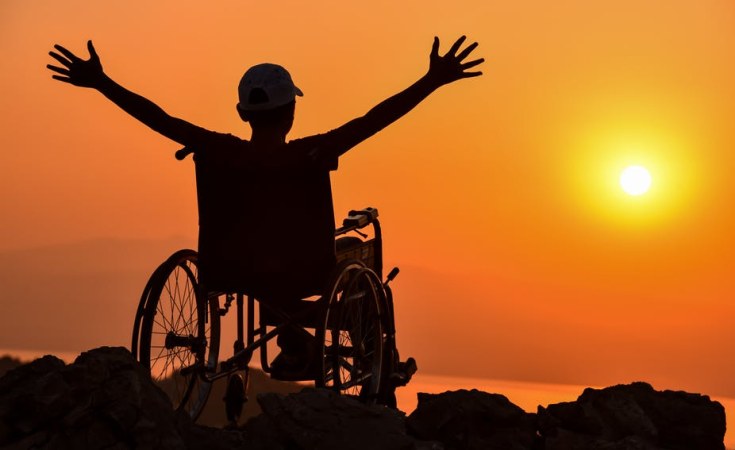
The Disregarded Voices Of Persons With Disabilities In African Nation-Building

If you are a person with disabilities in Africa (PWD), then be prepared for a miserable life marked by marginalization, social isolation, inaccessibility of public systems, and scant support. If many able-bodied Africans already face severe disadvantages, then you can only imagine the compounded plight of persons with disabilities and vulnerable groups.

In the dialogues and initiatives surrounding African progress, this topic is notably absent. In my personal experience not ONCE in any African Conference, development forum, or strategic planning session have I heard the topic broached! As if the African future is reserved exclusively for the so-called “able-bodied”.

Today I call on the African people and governments to correct this moral and strategic oversight.

And that is why, in my vision and planning for African nation-building, the rights and needs of PWDs are a central pillar that is integrated into all facets of the national development agenda. It is our sacred duty as builders of the African future, to design the policy, institutional frameworks, and community structures that will safeguard and enhance the lives of the vulnerable among us. Any African initiative that excludes the needs of PWDs is defective and must be revised.

Think broadly: architecture, infrastructure, housing, job training, education, public systems, transportation, marketplaces, assistive devices, social services. Every domain must be touched by this inclusion.

A true African leader is one who, guided from above, surveys the full landscape of the people’s needs—including the most vulnerable—and becomes their fiercest advocate. Not for political points but because it is the right thing to do. Because PWDs are citizens too who deserve equal support, investment, opportunity, and the full dignity of living autonomous, productive lives. They too have inner abilities given by the Creator that call for development!

I call upon the advocates of PWDs across Africa to proudly step forward and speak up. You are needed in African nation-building.

If we are to truly build an African future rooted in furthering values, then let leadership and governance in Africa resemble the Good Samaritan. He did not walk past the man crying out in pain on the roadside. He stopped, tended, and restored him. Such must be the honor Cross of African nation-builders!

As the Great Master was reported to say “…whatever you did to one of the least of my brethren, you did it to Me.” If we are to fulfill this Divine Directive, then we must recognize that PWD’s in Africa are among the “least of these”.

Therefore, only that African leader and government who energetically champions and thoroughly integrates the needs of PWDs and vulnerable groups into every layer of national life, is worthy of gaining Divine approval. Only that leader is a Good Samaritan. That noble leader who, in humility, joyfully helps and uplifts ‘the least of these’, thereby proving themselves to be a real helper to the people and a servant of God of earth!

~Dr. Ikenna A. Ezealah, Ph.D., MBA
Builder of the African Future
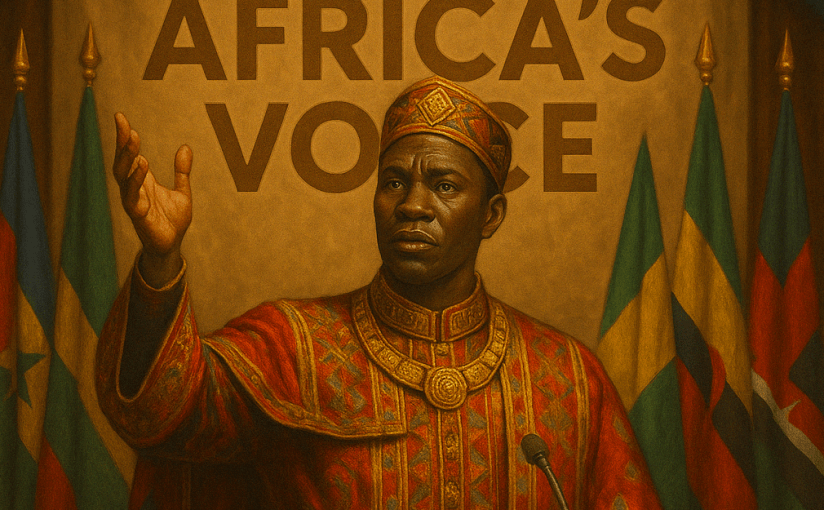
Leaders of Africa, Speak UP!

Many people are discussing Africa as the future—and rightly so, given its immense potential.

Academics, investors, politicians, think tanks, individuals, and governments alike all have something to say about the need to position themselves to benefit from the African growth they believe is coming.

Conferences are held to set global development agendas and define Africa’s role. Others focus on Africa’s place in the geopolitical tensions between the U.S. and China. Some spotlight climate change or other global trends and how Africa can adapt. Still others center on technological innovation and how Africa can catch up. The list goes on.

The voices are loud—talking about Africa, talking for Africa, even trying to set the agenda Africa should follow.

But you know who is silent amid all this clamor? African leaders.

Like palm trees swaying in the wind, many attend conference after conference, adjusting their positions to match whatever the international community is saying.

But no one truly knows the position of African leadership. No one has seen a united front articulating a bold, original vision for the Continent—a vision championed confidently before the world as Africa’s position!

So I ask: African leaders, where do you stand?
What is your conviction?
Where is this continent going under your leadership?
What bold vision have you put forth to shape the future of your people?
What priorities have you established, instead of merely accepting the priorities handed to you by others?

It is with shame, frustration, and fury that I look into the ranks of much of Africa’s leadership—because I am utterly clueless about where the continent is heading. There is no guiding vision.

Everyone is speaking about and for you, Africa. But you, leaders of Africa—why are you silent? Why do you lack conviction and original vision? Why have you become mere followers—puppets—echoing the positions of foreign ventriloquists?

Yes, a few African leaders today stand as exceptions. But most have no business being in office. They should step down and make room for those who do have the capacity and conviction—those ready to serve with their whole heart with an iron-fist for the good, and lead their people forward with original visions brought to life through aggressive nation-building!

Leaders of Africa: Stand up. Straighten your backs.

Speak up. Declare your vision.

Lead your people into a brighter future.

And if you cannot—then respectfully step aside so those whom Heaven has endowed and prepared for these times may step forward to take action!

The African people are tired of lukewarmness and weak leadership, and hunger for something more!

Now is the time for firmness, for strength, for vision, and for bold action.

Leaders of Africa… speak up for your People and Continent!

Leaders of Africa… Speak up!

~Dr. Ikenna A. Ezealah, PhD, MBA
“Builder of the African Future”

For Africa To Develop, Is Democracy The Right Form Of Government?

Summary: I ask the fundamental question: “For Africa to Develop, Is Democracy the Right Form of Government?” I address it by reexamining the basic principle of the US system, the colonial systems, and some developed countries today. A pattern emerges that shows a different truth than what is sold to Africa. The basic principle which Africa can use to achieve development once it is indigenously adjusted to its context.

Onward & Upward!

~Dr. Ikenna Ezealah

Youtube: https://www.youtube.com/watch?v=eSfMQyHZJdU