The US/Western Presence In Haiti & The African Leadership factor.

We hear through school and media that the US/West is in Haiti to promote robust democracy, economic development, and good governance for the progress of the Haitian 🇭🇹 people!

If this statement were Pinocchio’s nose, it would grow enough inches to poke the moon, just to boomerang back and shake the earth, then spiral sideways and rattle the stars. Give me a thousand breaks.

See the commentary by Èzili Dantò on US interests in Haiti.

It is always and everywhere historically the same story: the same aim, similar plot, same characters, same outcome.

A contributing factor is the lack of visionary leadership to unite Africa as the base of all global peoples and countries of African descent. This leads to geopolitical division and isolation, where individual countries can be strategically picked apart.

Collectively, political leadership in Africa today is dreadfully poor (with few exceptions). As a result, you do not have big-picture strategic thinking and bold action but mostly low-voltage politicians who are predictable and uninspiring.

Let me give you a small example of big-picture thinking.

In Djibouti, there are at least five foreign military bases: US, France, China, Japan, and Italy. Why? Djibouti is strategically located by the Bab-el-Mandeb Strait, which separates the Gulf of Aden from the Red Sea and controls the approaches to the Suez Canal. The latter is responsible for approximately 12% of global trade, 30% of all global container traffic, 7–10% of the world’s oil, and 8% of liquefied natural gas, etc.

Given that power to control global trade and influence global geopolitics, why would African leadership allow foreign bases in such a strategic location? The AU is embarrassingly weak and at this point I doubt it’s current usefulness and effectiveness. For if you cannot provide the firm leadership the African People need, why do you still exist as an organization?

Visionary African leadership would only allow a base with a joint force of African soldiers stationed there to control traffic in that area, so Africa can become a major player in global affairs. Africa today lacks real political leadership. There are a few exceptions, but the average in office is poor.

Africa needs a new wave of Political Lions to take firm possession of the various countries in order to forge and implement a strong and comprehensive strategy that will secure the interests, ensure the development, and promote the progress of the global African people.

Then Haiti will have the support it needs to be truly independent.

Kind regards,
Dr. Ikenna Ezealah

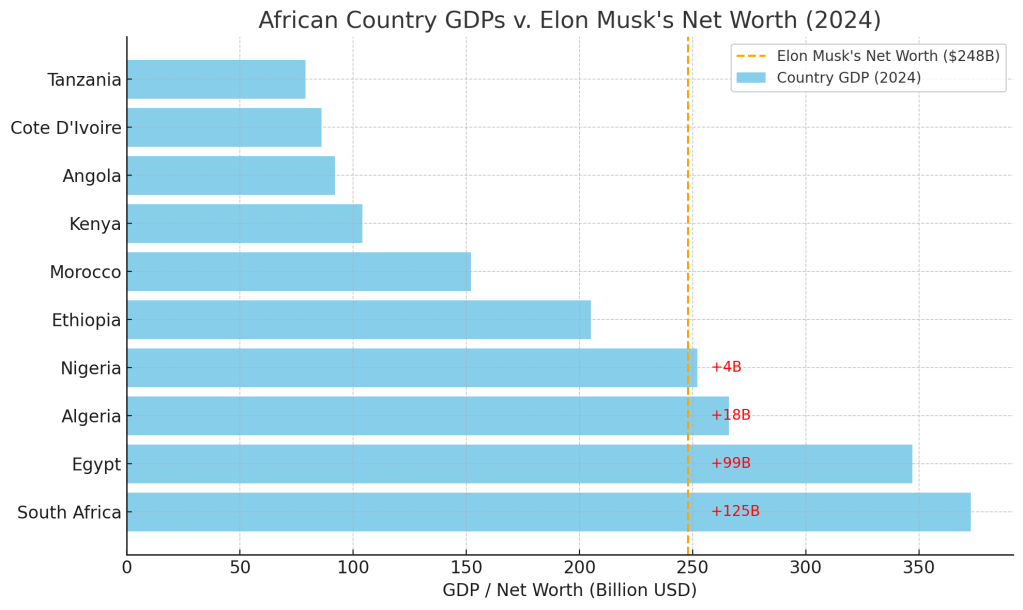
Top 10 African GDPs v. Elon Musk’s Net Worth (2024)

Just for fun, I asked ChatGPT to compare the current GDPs of African countries with Elon Musk’s net worth (estimated at $248 billion). While the figures should be verified, the preliminary result is:

Elon Musk is the 5th largest economy in Africa, with a net worth greater than 50 African countries. Here’s the numerical breakdown.

Top 10 African GDPs v. Elon Musk Net Worth (2024)

1. South Africa – $373 billion
-Musk’s net worth is 66.5% of South Africa’s GDP
-Difference: South Africa’s GDP exceeds Musk by $125 billion
2. Egypt – $347 billion
-Musk’s net worth is 71.5% of Egypt’s GDP
-Difference: Egypt’s GDP exceeds Musk by $99 billion
3. Algeria – $266 billion
-Musk’s net worth is 93.2% of Algeria’s GDP
-Difference: Algeria’s GDP exceeds Musk by $18 billion
4. Nigeria – $252 billion
-Musk’s net worth is 98.4% of Nigeria’s GDP
-Difference: Nigeria’s GDP is only larger by $4 billion
5. Ethiopia – $205 billion
-Musk’s net worth is 121% of Ethiopia’s GDP
-Difference: Musk’s net worth exceeds Ethiopia’s GDP by $43 billion
6. Morocco – $152 billion
-Musk’s net worth is 163% of Morocco’s GDP
-Difference: Musk’s net worth exceeds Morocco’s GDP by $96 billion
7. Kenya – $104 billion
-Musk’s net worth is 238% of Kenya’s GDP
-Difference: Musk’s net worth exceeds Kenya’s GDP by $144 billion
8. Angola – $92 billion
-Musk’s net worth is 270% of Angola’s GDP
-Difference: Musk’s net worth exceeds Angola’s GDP by $156 billion
9. Cote D’Ivoire – $86 billion
-Musk’s net worth is 288% of Cote D’Ivoire’s GDP
-Difference: Musk’s net worth exceeds Cote D’Ivoire’s GDP by $162 billion
10. Tanzania – $79 billion
-Musk’s net worth is 314% of Tanzania’s GDP
-Difference: Musk’s net worth exceeds Tanzania’s GDP by $169 billion

Imagine if we added large Western multinational firms to the comparison? The result would be disastrous. African people please listen to me… if you do not make big changes soon (starting with your “leadership”) then in the next 10years you will be completely swallowed by the global economy. Already now you are mashed up at the edge of the throat. One “throat-thrust” and you will fall headlong in the stomach to be digested.

There is but one way out…to heed the clarion call for vigorous nation-building!

Onward & Upward!

~Dr. Ikenna Ezealah

Conflict In The DRC

The Democratic Republic of Congo (DRC) is considered the richest country on earth in natural resources and minerals, and yet it has been in continual conflict for centuries. Since first making contact with the Portuguese in the 15th century, this place has been the focus of continental and international interests. The major conflict in that region today has everything to do with its resources and minerals, and nothing to do with democracy.

No one really knows who is operating in that country and where. Organizations are going in and out to do so-called “benevolent work”, airplanes and vehicles with undisclosed contents are entering and exiting, citizens are being displaced in conflicts, local rebel groups are controlling spaces, surrounding countries are engaging in this action, foreign countries and multinational corporations are also involved through agency. Somehow the resources of that country end up as finished products in foreign countries, on a scale contradicting the official trade figures. There is too much going on.

Satellite coverage is needed. I saw that Spacecom provides Satellite coverage for the DRC, but it is a foreign company operated by a foreign government (please correct me if I am wrong). That region needs an independent Satellite system that comprehensively monitors everything in that region and keeps the knowledge locally.

The exact location of minerals and resources should be pinpointed. The location of local groups, international organizations, foreign forces and their movements should be meticulously monitored in relation to the minerals and resources. The inflow and outflow of all airplanes, vehicles, ships etc should be tracked and their contents identified, the information should be closely coordinated with the military for enforcement action. Nothing should enter or exit the borders without close surveillance and comprehensive knowledge of all its contents.

Resource and mineral smugglers can be great helpers. Besides pursuing them, you can put out a reward for smugglers who can give insider knowledge of the real operations of people and organizations (foreign and domestic) in that region. Who can reveal the routes, sources of arms shipments, locations of transfer, quantities of minerals and resources diverted, the players involved, content of the airplanes and ships, and the underground coordinated movements. You then double or triple their reward if they wear spy body cameras to conduct an undercover operation to bring back video recordings of this information.

But all this presupposes you have leaders and people who are committed to bringing stability in the region, in order administer the minerals and resources in the country first for the welfare and benefit of the Congolese people. Also, the DRC cannot do this in a vacuum, but needs the partnership of other African countries. Thus, Africa must unite to bring stability to itself.

Naturally the situation is more complex than this, but these are preliminary thoughts. Finally, we must never lose sight of what is most important here: the security, welfare, and progress of the Congolese people.

~Dr. Ikenna Ezealah

How Can Non-Black People Celebrate Juneteeth?

I have observed recent discussions on this topic and seen the range of proposals people have suggested. I typically avoid these subjects because it can sound patronizing, but today I will make an exception and boldly address the fundamental fact for those who are earnest and sincere.

Juneteeth – June 19, 1865, also known as “Freedom Day”, commemorates the emancipation of enslaved African Americans after the Civil War. While I celebrate this milestone, I also see Juneteeth as a day of false freedom, gross deception, economic disenfranchisement, and systematic neglect by the US government.

In a capitalistic society economic freedom is the central freedom. The point of slavery was the mass exploitation and violence of one race by another, for the purpose of the mass accumulation of economic wealth. After the political, economic, and institutional deck with all its benefits had already been stacked against African Americans in favor of their white brethren, a “freedom” was given but without any strong economic policies to rectify the exploitation and reshuffle the deck to support the economic empowerment and autonomy of African Americans, so they could then leverage this might to influence the formation of the State in accordance with their interests. What a joke, but without the laughter.

Contrast this with the land allocation and benefits the government afforded to the white population through the Homestead Act of 1862. Also, with how the US government cared for white servicemen after WWII through the GI Bill (Servicemen’s Readjustment Act of 1944) that provided a range of benefits from education, home loans, unemployment benefits, business loans and much else. It is a known fact that discrimination prevented Black Americans them from accessing the full benefits enjoyed by their White counterparts.

Dr. Martin Luther King Jr. on Federal Subsidies to White Land Owners

So you have no political will to provide economic support for your black population for Juneteeth to “readjust” after centuries of slavery and economic exploitation, but you find this will for land allocation and also decades later for white servicemen so they can economically “readjust” after war. Do you see how disingenuous and duplicitous this is?

In the US, the absolute and exclusive measure of seriousness is how much economic benefit and incentives you are willing to provide! Everything else is minor or smokes and mirrors!

So how can non-black people celebrate Juneteeth?

Reading books and all that has value, but I have a different suggestion. If you are serious, ask a fundamental question:

“How can I leverage my position, connections, resources, and/or time to create opportunities for the economic advancement and empowerment of African Americans?”

This question is all embracing. Thus, your actions should produce, lead to, or create conditions for tangible economic gain. If you do this, then you would have celebrated what lies at the heart of Juneteeth, and only then would you be a real ally of the African American community.

~Dr. Ikenna Ezealah

Addressing The Recent Change In Nigeria’s National Anthem

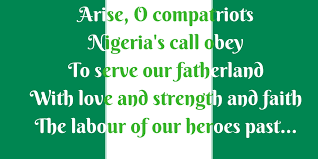
Recently, the Nigerian President led a campaign and signed into law a change in the national anthem. The previous national anthem “Arise, O Compatriots”, created by five Nigerians and then was put to music by Benedict P. Odiase, is now replaced by “Nigeria, We Hail Thee”, which was written in 1960 by British expatriate Lillian Jean Williams and was initially adopted as Nigeria’s national anthem when the country gained independence on October 1, 1960.

“It is my priority” the President said, as citizens were given no input or involvement in the process. A minor issue was prioritized, despite major issues and urgent national priorities troubling the lives of the Nigerian citizens such as inflation, skyrocketing cost of food, inconsistent power, insecurity, dilapidating infrastructure, underfunding of education, departure of multinational firms, the downward spiraling economy, and much more. This move, reflecting misplaced priorities, poor timing, and a myopic insensitivity to the historical backdrop of the British colonial legacy by reimposing an anthem on Nigerians that a foreigner created and not the Nigerian people, is tragic evidence of lack of leadership and vision. An anthem is too personal for a people to be outsourced.

The words of “Nigeria, We Hail Three” were touted as being more inspirational and befitting. But no matter how inspirational the words of any chosen anthem are, the real question is: do the actions of the Nigerian political class as representatives of the citizenry reflect it? No! Can you find traces of respectable value system in most from the political class that gives meaning to the words of the national anthem? No! In the now former anthem, the first word is “Arise”, which is to awaken to higher vision, values, and sense of duty. To transcend ethnicity and petty politics, in order to listen to the call of service that, through diligent implementation, furthers the welfare of the whole. How many citizens and political leaders in Nigeria’s history up to the present can say they have even fulfilled this first word? Words change conditions only when practice empowers them to manifestation. The new anthem will not change the behavior of the political class, so instead of changing anthems the right move would have been to look within and change. If this proved too difficult, then it is the poor leadership and the political class that should have been changed, not the anthem.   

Moving beyond constructive criticism and notwithstanding the atrocious timing of the change in national anthem, I will now offer a solution and explain how a change in the national anthem can be approached that would encourage greater inclusive and a sense of collective ownership. Here are the ten recommended steps to properly changing the national anthem:

  1. Host an open townhall with members of the public from all levels of society, government officials, organizations and civil society.
  2. Make a live case to the people. Describe the origin, meaning, parties, timeline, and development of the anthems within the historical context of the country’s history, then share reasons why a change is necessary.
  3. Invite comments, questions, healthy debate, and exchange of diverse ideas so people are included in the purpose and process.
  4. Announce a “National Anthem Rewrite” initiative in which the Nigerian citizens are encouraged to create and submit a national anthem, and a recitation video to a national commission and on social media. The objective is to empower the Nigerian people to take ownership, unleash their creativity, and ensure the recited words of national pride arise from their spirit!
  5. All created anthems will be reviewed, finalists will be selected, then one chosen; or different elements of some can be combined to create one whole anthem. A citizen’s commission will adjoin the national commission to participate in the decision-making process.
  6. The bill introducing a change to the national anthem will then be presented to the National Assembly, where it should be passed after some discussions.
  7. A signing ceremony will be organized with members of the public from all levels of society, government officials, organizations, and civil society.
  8. A band/group comprising different tribes and regions of the country will be composed to sing, record, and perform the national anthem.
  9. The author(s) of the anthem, the public, and others will be invited to Abuja for the first live performance of the group in a day of national unity. The event will also feature performances by Nigerian artists, poets, and comments by civic and academic leaders. The author(s) in a ceremony will be given an award(s) by the President in recognition of their creative contribution to the country. Then, the multiethnic group garbed in their native attires will sing it live for the first time. Their voices, united with the audience, will reverberate proudly through the Nigerian ether!
  10. The lyrics will be engraved in a large plaque and decoratively mounted tall in a wall in the Statehouse Aso Rock Presidential Villa and the National Assembly Complex.

This way, the Nigerian people are involved, centered, and use their own abilities to define the meaning of their anthem instead of a foreigner. It is indolence, lack of vision, and want of creativity that makes African leaders always ready to adopt foreign ideas, systems, and institutions, without the indigenous impetus to harness the abilities of their people, build on their cultural heritage, and create something original.

Here, many will remonstrate, saying “Nigeria was not named by Nigerians, must we change that too?” If we are serious, yes! How did Nigeria get its name? According to Richard Bourne in his book:

“The name ‘Nigeria’ had been coined by his [Frederick Lugard’s] wife and admirer, Flora Shaw, colonial editor of The Times, in a letter she wrote to her paper in January 1897. She used it to define the territories abutting the River Niger that were then being traded in or claimed by the Royal Niger Company” (Nigeria: A New History of a Turbulent Century; p. 3).

Thus, Nigeria was named not with any historical symbolism, rich cultural meaning, or existential ideal for its future development, but based solely on a colonial convenience of grouping people together in relation to a landmark! And you my people conveniently accept that and even defend against any change because you have grown “accustomed” to it? How deep have we sunk in Africa! Now contrast this with the reason that Dr. Kwame Nkrumah gave in his autobiography about renaming the Gold Coast “Ghana”. He spoke about how in the very early days of the Christian era before England was important, his African ancestors had attained a great empire:

“It is said that lawyers and scholars were much respected in that empire and that the inhabitants of Ghana wore garments of wool, cotton, silk and velvet. Thee was trade in copper, gold and textile fabrics, and jewels and weapons of gold and silver were carried.

“Thus we may take pride in the name of Ghana, not out of romanticism, but as an inspiration for the future. It is right and proper that we should know about our past. For just as the future moves from the present, so the present has emerged from the past. Nor need we be ashamed of our past. There was much in it of glory. What our ancestors achieved in the context of their contemporary society gives us confidence that we can create, out of that past, a glorious future, not in terms of war and military pomp, but in terms of social progress and peace.” (The Autobiography of Kwame Nkrumah; p. 195-96)

What a difference of day and night in the naming of “Ghana” and “Nigeria”! One rich in historical meaning and an inspiration for the future, while the other is just a geographic convenience lacking substance. Perhaps the difference is that Ghana has had the fortune of a visionary leader at the head of government, while Nigeria has not! Nigeria has even historically worked hard to ensure its most talented and industrious citizens are deprived of every opportunity of leading government, so that an avaricious cabal of tribalistic, vacuous, and visionless officials can continue plundering the national coffers while pushing the people in penury toward the abyss of infamy. How will a change in anthem effect a change in this rot? A gargoyle that changes its shirt is just a gargoyle in a beautiful shirt. Except here the shirt is now “foreign made”.

To effect change in Nigeria and Africa, our leaders need to become scholars of history in addition to an elevation in values and thinking, so our present actions build from the past. Follow me therefore on a quick diversion to explain the meaning of “Ghana”.

Ghana was a kingdom of the Soninke people, who are the northernmost people of the great Mande family that occupied a territory close to the Sahara desert. To properly situate Ghana in Ancient Africa, we should be clear of ethnic clusters in that the Soninke, Malinke and Bambara belong to a group referred to as Mandingoes or Mande-speaking (The History of West Africa; p. 15-18). This is important because when interpreting historical records, the same kingdom might have been referenced with slightly different names and meanings by the people, only because the descriptions might arise from different languages of ethnic groups in the same or different broader family. This notion applies to Ghana because historically there are two traditions (perhaps more) that mention a great Soninke kingdom of gold with the names Wagadu and Kaya-Magha, which preceded the Mali Empire and its preeminent leader Mansa Musa!

In one tradition, Wagadu was a prosperous kingdom blessed with vast quantities of gold with its capital at Kumbi, and its kings bore the title of Magha or Manga. The other tradition arose out of Ta’rīkhs (Arabic texts) from Timbuktu that mention the kingdom of Kaya-Magha as predecessor of Mali, one of these texts name the capital city Qunbi (like Kumbi), while the other calls it Ghana. Kaya-Magha in Soninke language means “king of gold”. However, in Malinke, Gãna or Kãna means war chief (The History of West Africa; p. 120). Ghana was called ‘the land of gold’ by some Arab geographers. Although people use the name Ghana interchangeably for both the kingdom and capital, al-Bakrī says in his text that ‘Ghana is the title of their kings’. The ‘ghana’ was the “king of gold” and powerful protector “war chief” who ruled the land of gold, with its thriving people, social order, beauty, systems, and advancements!

Do you see the depth of thought the Osagyefo Kwame Nkrumah gave to the choice of name? How the name and concept can awaken pride in the people? Not flippant and superficial, but deep and introspective. Do you see how he insisted and persisted to reclaim the sovereign right to rename his people according to their rich heritage, and as a signpost for continuous progress? So, why does the Ivory Coast, Nigeria and others still bear their names of colonial humiliation? As a country we gain independence, yet we lack the strength, insight, and self-respect to choose our own name with relevant meaning and create our own original systems. Complacent in the comfort that it has become “customary”, we avoid the discomfort of making changes and instead choose the indolent road of either keeping things the same, or to make a change we look abroad for what we can adopt from others!

Look at Nigeria: a British education and legal system complete with judges still wearing the ridiculous colonial wigs. We are black people in Africa, the British have left, and we still insist on wearing white wigs as a symbol of our “colonial legal tradition”, even though US white American descendants of Europeans, who have a greater claim to wig-wearing due to racial homogeneity no longer perpetuate that custom. Yet it is us as black people who thoughtlessly still insist on wigs. Absolutely incredible! If original thinking is too challenging then, being facetious, we can at least wear a black African wig that resembles African characteristics!

In governance Nigeria initially adopted the British parliamentary system, and then to make a change switched to the US governance system. Where are the original systems of Nigerians and Africans? What new institutions and structures? Are we just copycats who must rely on Europe and the US for everything? And with the emergence of China will we copy them too? Under poor leadership and an apathetic citizenry, instead of looking within to produce originally, to make a change we always look abroad to copy as a certified stamp of personal humiliation. We were given free will and a brain, thus the capacity to choose and think for ourselves… it is time to creatively exercise both! We are a great people, so it is time to give life and cultural expression to our vibrant abilities as a people rich in heritage and potential!

How can an African hold the seat of leadership, then simply continue the status quo and not earnestly strive to make a change, but content with an adopted name, anthem, systems and all. Never should you accept it, for your sovereign right and indigenous pride as an African leader should forbid it! Leaders of Africa, stand up and straighten your backs or give way for others who are willing to! It is high time to awaken to high deeds and work diligently… for the self-respect, welfare and indigenous progress of the people!

The issue stated here is beyond naming, but the earnest process of Africans using their own indigenous abilities and heritage to guide all progressive developments connected with themselves and their environment! It includes name, culture, systems, institutions, architecture, theories, and everything else. The people have the right and sacred duty to participate in the forming of all symbols, systems, and institutions of their country. Here, in addition to misplaced priorities, the Nigerian government woefully failed and deprived its people from cooperating by using their own abilities to creatively form a new anthem and thus design a national meaning from their own inner beings.

Wrong and shameful, poor leadership lacking in vision, this is the sentencing of the Laws of Nature and many Nigerians, for which my words are the iron gavel that pounds in judgment! Wake up…Arise O Compatriots!

~Dr. Ikenna Ezealah
Africa Must Unite!

The saying “Africa must unite” is not just a philosophical ideology, but a practical necessity for survival and continental progress. I have earnestly reflected about the way forward for Africa from every possible angle, and have concluded:

“Without collective African unity, no African country in the present or immediate future can develop into a global power.”

Here is an illustration using Senegal. Imagine Apple and Google setup operations in Senegal, and Senegal enjoins them to strictly follow local laws to avoid legal consequences. Now consider the Senegalese GDP compared with the revenue of the multinational firms.

Senegal 2023 GDP: $64 billion

Apple 2023 Profit: $97 billion ($383 billion revenue)

Google 2023 Profit: $73.795 billion ($307 billion revenue)

Question: How can Senegal whose GDP is less than the profit of both firms realistically have the economic power to hold them accountable? How can Senegal alone withstand the financial onslaught and greater leverage of the stronger multinational firms if they flexed their might through various means?

To have effective enforcement power over multinational entities and stronger foreign countries, the continent needs to work together because the collective economic and political strength, when strategically coordinated, will be able to outweigh and overpower. It is as simple as that.

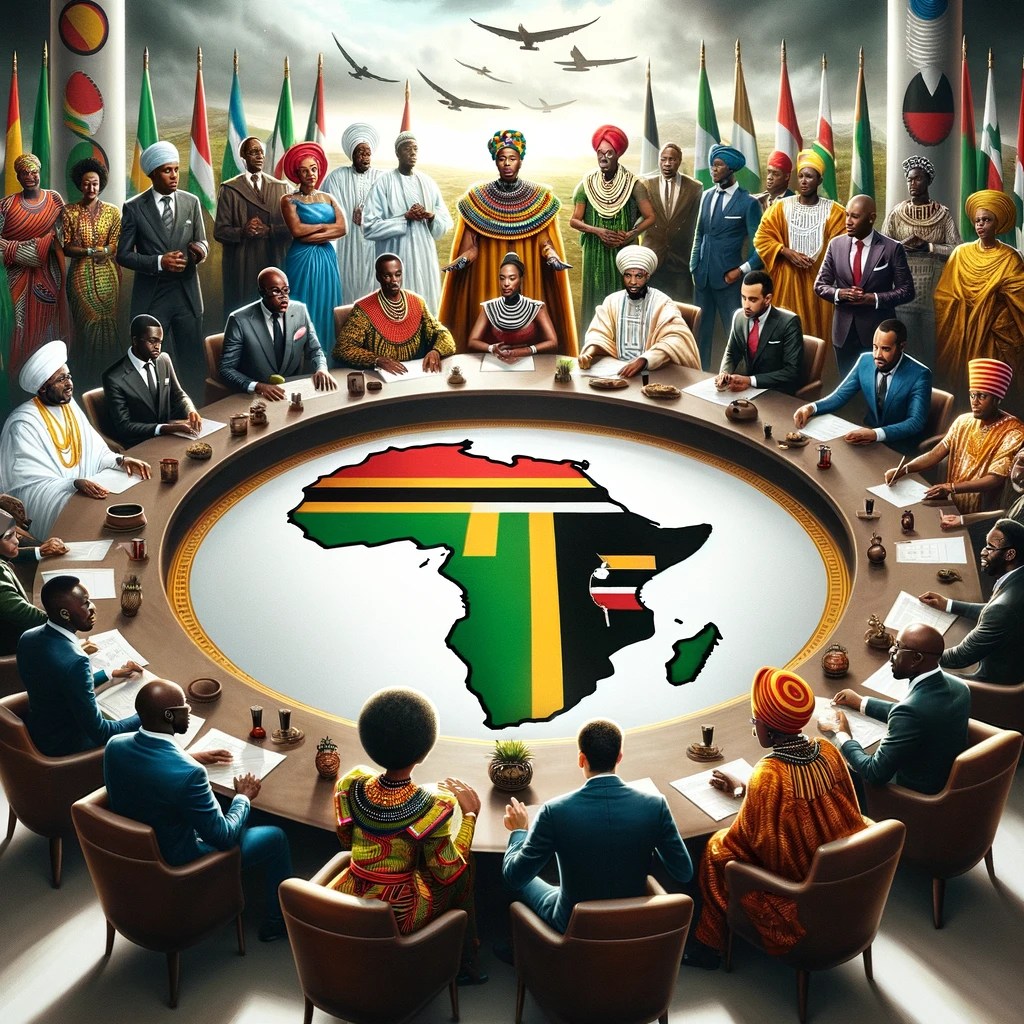
Imagine if Africa has a Continental Congress that forms overarching unifying policies so there are two sets of laws: domestic laws of the African country, and an overarching continental law that applies when specific criteria are met. Now imagine if one of these policies is summarized as follows:

“If a multinational firm operates in any African country and their annual revenue equals or exceeds the GDP of the African country, then the multinational firm will no longer be subject to the local laws of the said country but superseding continental regulation and oversight by the African Continental Congress.”

The cross-border oversight would ensure that monitoring, regulation, and enforcement would be continental in scope and effect through tightly coordinated political and economic power.  The same holds true in other sectors. So, if African countries obstinately insist on pursuing their individual courses and policies because they are enjoying the spoils of “sovereignty”, then they will be relentlessly picked apart and remain weaker.

But Africa’s unique geography, cultural heritage, history, resource endowment, and present circumstance in global geopolitics absolutely requires that, to properly develop and counter all adverse influences, all African countries be closely coordinated so they work as effective and efficient parts of a greater whole.

Africa’s strength lies in its unity, whereby smaller rivers join into a stronger ocean of collective might whose waves can then guide the march of events to a brighter African destiny.

“Africa must unite.” So the Osagyefo Kwame Nkrumah was right!

All for one and one for all. Onward & Upward!

~Dr. Ikenna Ezealah

The Flawed Framework Of The US-Africa Summit

The US-Africa Leaders Summit was an initiative in which President Biden invited leaders from across the African continent to Washington DC on December 13-15, 2022. For the US the Summit aimed to strengthen ties with African partners and collaborate on key areas of mutual interests.

I respect the general purpose of the Summit and applaud the US effort in organizing it. However, I believe the framework of the Summit was severely flawed and even in poor taste, but that the African leaders were willing accomplices in this poor design.

A Summit between 1 country and 1 continent (54 countries) is organized, and it is continent that comes to the country instead of the 1 country coming to the continent! A framework reflects a worldview, and here the worldview reflects the attitude that Western interests is primary in any dynamic. As the all-important center around which all others must gather around and find their place, despite the use of words like “partners”. The optics reflected the notion that the US and the President does not believe making serious efforts to be worthwhile when dealing with Africa, and they will only engage when it is convenient. Thus, going to Africa is not worth the effort unless the whole of Africa comes to the US.

But the African leaders also erred. The framework of their thinking still reflects a valorization of the West and the US, not as partners but as models to emulate and the center around which they should organize themselves. In the attitude of African elites is a subconscious tendency to prioritize and compliantly follow the initiative of theirs without original modification. Thus, when invited abroad, they eagerly fly to DC and take pictures with the giddiness of star-struck tourists.

That is what the framework of the US-Africa Summit communicated to many keen observers who paid attention.

If there was a real leader in Africa, then upon receiving the invitation he would graciously thank the US and take the invitation under advisement. Next, he would consult with other African leaders and kindly respond with a modification: saying that the leaders of Africa propose the Summit be held in Africa, in a country to be chosen by a designated date, and that African leaders will give the US delegation a befitting reception on African soil.

But who in Africa responded this way? Where was the leadership that continentally organized and coordinated other African leaders to ensure that even framework of the US-Africa Summit was respectfully balanced?

For the next US-Africa Summit, I recommend the US President visit Africa and engage with the African officials there. The framework would then show that the US wishes to take the trouble to engage Africa like respectful partners, and is willing to make the effort to forge new deals at the cost of some convenience.

Again, I applaud the aim of the US-Africa Summit, but the framework among other elements was flawed and needs to change to produce a better outcome.

~Dr. Ikenna Ezealah

Seven Questions For African Development

Sometimes a danger to real African development are Africans with a lot of formal western education, because many can only think within the foreign framework they learned in schools. So, their idea of development is reproducing on the African people the ideas, institutions, and societal forms that apply to Western societies, to the subordination of their own indigenous systems, believing it will also work for the African people. Thus, they wrongly regard imitation as progress so long as it produces an outwardly visible benefit. But this is not development, just copying and long-term stagnation.

What is development? The concept must first be clarified. To achieve clarity, we must not draw opinions from our thoughts, but observe the Laws of Nature!

In Nature development is endogenic…from within. A rose develops when its inner qualities unfold outwardly, and when the guidance for this unfolding comes exclusively from within. The seed never needs instructions from without, only a supportive environment for what is within to unfold. Thus, development is a progressive unfolding of inner qualities, a sequential expression of indigenous capabilities, and a logical building out of inner components to outward completion, in accord with the inherent nature of the species.

To be “African development”, an initiative must come from within the souls of the African people, as a natural expression and a progressive building out of their indigenous qualities and cultural heritage. It must not come from without, otherwise it is adoption or an unnatural imposition. In Nature, even when something comes from without (water, sunlight), it only neutrally reinforces and helps the species express its inherent qualities.

So when people have big initiatives, plans, and developmental agendas concerning Africa, some questions to ask are:

  1. Is the plan driven by genuine love for the welfare of the African people?
  2. Did the central idea originate from the soul of the African people?
  3. Will the initiative help to unfold and mature the natural abilities of the people?
  4. Is the concept in harmony with their cultural heritage and indigenous nature?
  5. Do the plans build-on and improve their preexisting systems and social frameworks?
  6. Will the African people be uninfluenced implementing the initiatives?
  7. Is the final goal to make them self-sufficient and independent from foreign governments and institutions?

If initiatives are earnestly examined by these questions, and all answers are not a resounding yes, then real African leaders should relentlessly call them to account! African development should not advance foreign norms and institutions on the African people, but it should really operate in strict accord with the concept of development. The “African” welfare and interests coming first to then lead and guide the strategic implementation of “development”.

~Dr. Ikenna Ezealah

Reflection: What Did I Do During My Internship At The International Trade Center (ITC)?

I respect professionalism and I strive for excellence. Stylistically, my professional maxim is “wear your destiny”. Thus, in Geneva I resolved to always look and act like consistent my goal of being an international nation-building diplomat.

The internship:

I spent the Summer 2023 as an International Trade Intern at the International Trade Center (ITC) in Geneva, Switzerland. The ITC is a United Nations agency formed with a joint mandate from two UN agencies: WTO and UNCTAD. At the ITC, I worked for the Division of Market Development (DMD), which has two main parts: 1) Formation of National Export Strategy; & 2) Implementation Management (IM). I worked with the latter team.

The purpose of Implementation Management (IM) is to equip countries with tools to implement the National Export Strategy developed by the ITC in consultation with the country. To achieve this, the ITC recommends establishing trade advisory committees that brings private and public sector representatives together to advise the government on trade. The export advisory committees are sometimes called “National Export Councils” (NEC). Collectively, the import and export advisory committees is a country’s “trade governance system”.

The ITC created a Model Legal Framework years ago, but it became outdated, so I was hired as an intern to renew it. To achieve this, I reviewed the legislative acts establishing trade governing systems in the following six (6) countries: the United States, Turkey, Nigeria, Singapore, Ivory Coast, and Sri Lanka. I examined:

  1. US trade governance system including the Trade Act of 1974 and 2022 that established and expanded the trade advisory committees.
  2. Nigerian Export Promotion Council Act No. 73 of 1988
  3. Turkish Exporters Assembly established in 1993 that operates within the Law No. 5910
  4. the Singapore Economic Development board Act of 1961
  5. Ivory Coast National Export Decree No. 2014472 of 2014
  6. Sri Lanka Export Development Act No. 40 of 1979

My comparative analysis, findings, and recommendations of the trade governing systems were organized in the final product of a research paper, presentation, a full draft of a new model legal framework (created by my findings and legal creativity), and originally designed flowcharts showing the relationship of the various trade governance elements. Also, I created a checklist for ITC consultants to assess the strength of government oversight bodies, and a Questions & Answers brochure about National Export Councils.

Thus, my internship resulted in an updated Model Legal Framework for the ITC! I am grateful for the tutelage I received from my supervisors. These knowledgeable gentlemen were helpful to my development. Thanks to Case Western Reserve University School of Law and the ITC for the great opportunity. I am proud of accomplishing the work I was hired to do, of reciprocating value, and knowing that my work will endure.

Onward & Upward!

Dr. Ikenna Ezealah

Why Am I Pursuing A JD (Juris Doctorate) After A PH.D.?

This is me pictured in December 2019, in the graduation regalia of my Ph.D. in Higher Education Leadership.

[Side note: I wish to thank SREB’s (Southern Regional Education Board) Doctoral Scholars Program for their fellowship award and institutional support that helped me attain my Ph.D.]

Then [December 2019], I thought I was done with school because I achieved a terminal degree. Then, I did not have the drive for African development as I do today. So what happened that prompted me to pursue a JD with a strong drive for African progress? The quarantine during Covid gave me the space to reexamine my life, study Africa past and present, and then ask myself:

What is your life contribution toward the development of your people? I had no answer.

As I observed Africa, I realized the institutional structures and social orders have mostly remained the same as during colonization. It had not been transformed and adapted to the indigenous nature and cultural heritage of the people. The precolonial legacy of Africa had been utterly abandoned, and the incongruence between the indigenous nature of the people and the adopted institutional forms breeds much of the retrogression experienced in the continent today. Also, the notable lack of genuine leadership in Africa that is truly committed to the welfare of the people oppressed me.

I wanted to partake in the work of institutional transformation to promote the indigenous progress of the African people, and to help support the emergence of genuine leadership in the continent. However, since modern societies and institutions are governed by law and legal frameworks, I needed to become a legal professional to authoritatively engage in institutional transformation. I realized the twin swords of a JD and PhD would powerfully equip me with all that was necessary to achieve the objective. Thus, I enrolled in law school in 2022 to pursue my Juris Doctorate.

I am a Nigerian-American, a son of two worlds. I have given and will continue giving back to the US, a country that has given me so much! But as a son of Africa, I could not give all my youth and vibrant adulthood to one country, only to leave Africa with the exhausted residues of my old age. I needed to give the African people the full strength of my adulthood and the climax of my powers for nation-building! I owe my people this.

The directive to “give to Caesar what belongs to Caesar, and give to God what belongs to God”, speaks to the law of balance, of the duty to return value where we receive it. Applied to my life, I needed to return value to both societies that comprise my identity and have given me much. However, in the process, the African people will not be left behind and empty handed! Hence, my life objective: to be a helper and guardian of the welfare and further development of the African people. I simply want to serve.

You see, I found my answer.

Onward & Upward!

~Dr. Ikenna Ezealah