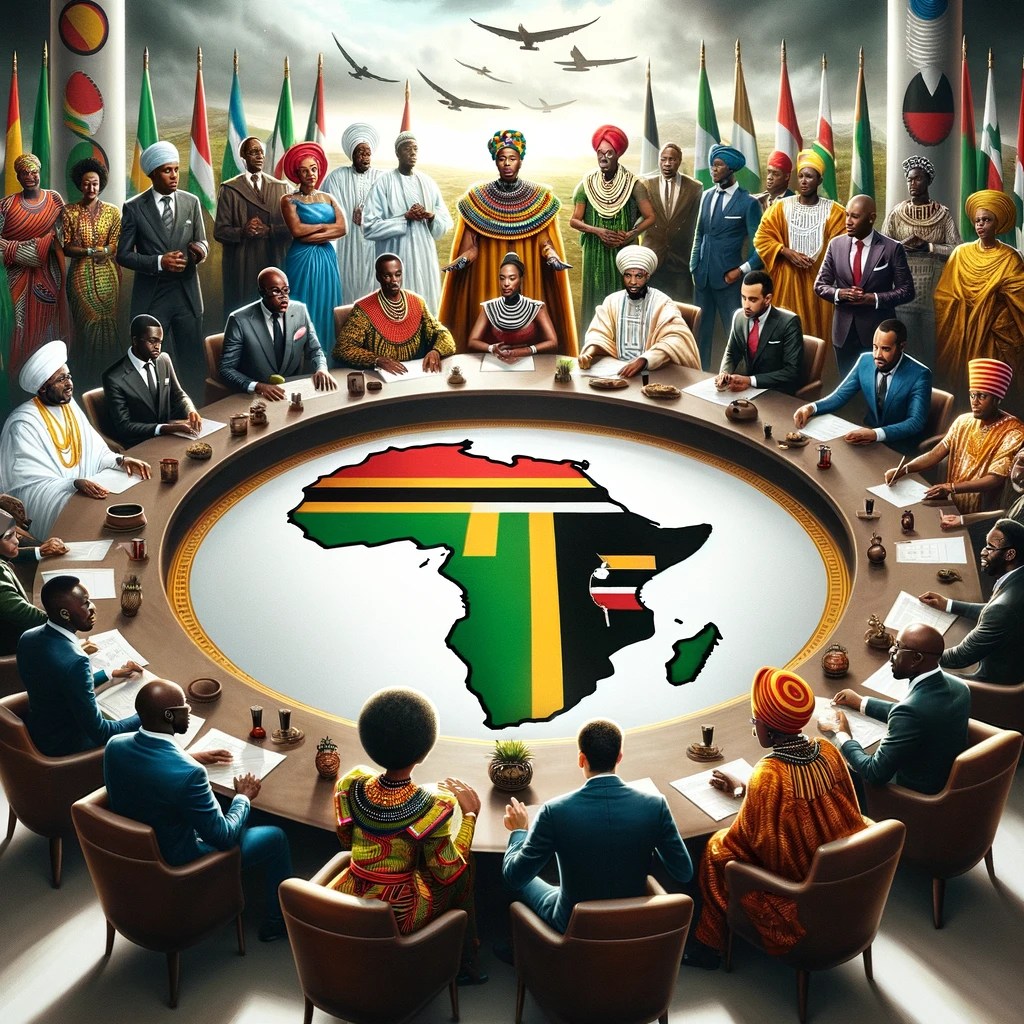
Africa, It Is Time To Reclaim Your Naming Rights!

Africa, it is time to reassess the names of some territories, landmarks, and places you have continued from colonization, and which you have not corrected since gaining independence. It is time to reclaim your naming rights. I have some examples to initiate broader reflection:

Question 1: Do you know why the city “Port Harcourt” in Nigeria is called “Harcourt”? Richard Bourne says the following in his book about the former Colonial Governor-General of Nigeria Frederick Lugard, who oversaw the amalgamation of the Northern and Southern Protectorate to form “Nigeria” in 1914:

“Lugard finished his term in Hong Kong in March 1912 and, exploiting his status and contacts, successfully lobbied Lewis ‘Loulou’ Harcourt, Viscount Harcourt, Secretary of State for the Colonies in the Liberal government, to become Governor-General of Nigeria. In August 1913, as a gesture of thanks towards his patron, Lugard got his permission to name a newly built port on the Niger ‘Port Harcourt’” (p. 11).

1913 – 2024 = 111 years! Question: why in 111 years has the name of a landmark in Nigeria not been renamed after one of many prominent Africans of the native ethnic group in that region? Why are you so comfortable continuing this colonial legacy instead of reclaiming your naming rights? Where is the African leadership? How can you accept one of your cities named after a colonial head because of a backdoor political deal to rule your people?

Question 2: Between Zambia and Zimbabwe, the charming Zambezi River falls over a cliff and forms a beautiful and massive waterfall! The enchanting scene is such a marvel that it is named one of the wonders of the Nature world! However, Why is this natural wonder in Africa called “Victoria Falls”? According to Brittanica:

“The British explorer David Livingstone was the first European to see the falls (November 16, 1855). He named them for Queen Victoria of the United Kingdom.”

1855 – 2024= 169 years! Question: why in 169 years has the name of this gorgeous natural landmark not been renamed after an African Queen? Why are you comfortable continuing this colonial legacy that pushes your own history to the side? Also, are you not skeptical at the coincidence of the waterfall bearing a non-African name as it is labeled a natural wonder of the world?

Question 3: Why is Victoria Island in Nigeria called “Victoria”?

My Theory: The Royal Niger Company (1879-1900) received its charter from the British Government and operated in West Africa signing and enforcing unfair trade deals and taking territories. Their charter was eventually revoked and their assets transferred to the British Government who, on January 1, 1900, colonially took control of the area they would later amalgamate to Nigeria in 1914. During this time of the Royal Niger Company, Victoria was the queen of the UK (1837-1901). Therefore, I suspect “Victoria Island” in Nigeria was named after her.

Question: Why in over 100 years has the name not been changed to its original name, or renamed after a prominent figure in the ethnic group who for hundreds of years have historically populated the area? Where is the leadership in Africa?

The same pattern repeats itself in all African countries today. The relic of the colonial era that is shamefully continued. But it is time for change and the African people need to reclaim their naming rights and make a comprehensive change. Moving forward, every single landmark, natural wonder, city, town etc. on African soil that bears its legacy from colonization needs to be renamed with an African name. The African people had names for these territories and places, so it is time to revert to those names or give them a new one… but in the image of the African people! Stand up my people.

Onward & Upward!

~Dr. Ikenna Ezealah

Africa, What Is The Vision?

When I look at Africa today, the unsettled question that burns within me is: what is the vision? When I examine the various countries, their present and past officials, again the question resounds: what is the all-embracing vision for Africa?

There are many conferences, policy discussions, analysis, meetings, investment forums and the like. People gather to issue bold declarations and start different initiatives. And while all of this has value, today I still do not see or have heard a genuine vision for the continent that is established as the guiding light and fundamental principle around which all activities and African countries are meticulously organized and coordinated.

Africa, what is the vision?

People may point to the African Union 2063 Agenda. I have read it, but they are just words on a document whose effect has been lukewarm at best. I have yet to see an African official who embodies the spirit of that vision along with their own, who burns like an ocean of flames for indigenous African nation-building! That when they speak you feel the volcanic heat of enthusiasm that inspires bold and diligent action to reclaim the African destiny! The type of official that no longer has a vision but has become the vision!

Africa, what is the vision? And where are the visionaries?

This question troubles me because there is need for it. You see, there are two types of changes – changes within a system, and changes to a system. Most of these activities, initiatives and conferences are based on incremental changes within the system. But the type of vision I am referring is about changes to the system itself, that still embraces the smaller incremental changes.

Since African countries gained independence, it has been a continuation of the adopted colonial systems. A Continental Congress still needs to be called to revisit and initiate changes to these adopted institutions and systems, in order to redirect, redefine, and redesign the African destiny!

Africa, what is the vision? That is the call of this generation.

Onward & Upward!

~Dr. Ikenna Ezealah

Garvey-Nkrumah Fellowship Program

It is with great joy I announce that, this Summer, I will be a Legal Fellow and global cohort class member of the 2024 Garvey-Nkrumah Fellowship Program!

The Garvey-Nkrumah Fellowship Program, established in honor of international civil rights leaders, political theorists, and dignitaries Marcus Garvey and Kwame Nkrumah, is a summer leadership and professional development initiative designed to train aspiring lawyers and future leaders of African descent in the areas of International Trade & Development, Public Policy & Diplomacy, Conflict & Dispute Resolution, and Civil & Human Rights. Fellows will engage in a comprehensive learning experience through a legal internship, a trip to Ghana and Rwanda, and a self-directed capstone project designed to advance solutions that address legal, social, economic, and/or public policy issues within Africa, the Caribbean, and the Americas.

This Legal Fellowship is a big victory, for it strategically builds on my professional experiences from 2023: (1) International Trade Intern at the United Nations International Trade Center in Geneva, Switzerland; (2) International Diplomatic Immersion experience at the Washington International Diplomatic Academy; and (3) Multilateral Diplomacy training at the United Nations Immersion Program for Multilateral Diplomacy.

With unswerving precision it also furthers my professional goal:

To be an international nation-building diplomat who creates and implements policies that drives the indigenous development, progress, self-sufficiency, and economic integration of the African continent.

I resolved to go to law school to answer an inner call to support the emergence of genuine leadership in Africa, to partake in the work of institutional transformation in post-colonial Africa so it reflects the cultural heritage and indigenous nature of the people, and to create frameworks that encourages the creative expression of the natural abilities of the African people for the progress of the African continent.

Yet I knew my designs and efforts alone would be insufficient, for I needed the decisive Grace of God and His Blessing to guide my earnest efforts to reach the goal! Thus, I find success because I try to lean into the guidance of God to know where I am to energetically exert diligent efforts to achieve victory! I am thankful to the Almighty for His Grace that opens doors!

My formula is: The will + higher guidance + strategic diligence /(over) time = unconditional victory! Every element in the equation must be balanced for the victory to be unconditional

I am honored to be a Garvey-Nkrumah Fellow, in the names of two men whose lives are a signpost to my own destiny. Yet I know every success I am afforded is only a Divine loan I am to repay through the service of my life to help my people. Thus, what drives me is not personal success, but to achieve my life’s objective:

To be a servant of God on earth, and a helper and guardian of the welfare and further development of the African people!

Onward & Upward!

~Dr. Ikenna Ezealah

The Flawed Framework Of The US-Africa Summit

The US-Africa Leaders Summit was an initiative in which President Biden invited leaders from across the African continent to Washington DC on December 13-15, 2022. For the US the Summit aimed to strengthen ties with African partners and collaborate on key areas of mutual interests.

I respect the general purpose of the Summit and applaud the US effort in organizing it. However, I believe the framework of the Summit was severely flawed and even in poor taste, but that the African leaders were willing accomplices in this poor design.

A Summit between 1 country and 1 continent (54 countries) is organized, and it is continent that comes to the country instead of the 1 country coming to the continent! A framework reflects a worldview, and here the worldview reflects the attitude that Western interests is primary in any dynamic. As the all-important center around which all others must gather around and find their place, despite the use of words like “partners”. The optics reflected the notion that the US and the President does not believe making serious efforts to be worthwhile when dealing with Africa, and they will only engage when it is convenient. Thus, going to Africa is not worth the effort unless the whole of Africa comes to the US.

But the African leaders also erred. The framework of their thinking still reflects a valorization of the West and the US, not as partners but as models to emulate and the center around which they should organize themselves. In the attitude of African elites is a subconscious tendency to prioritize and compliantly follow the initiative of theirs without original modification. Thus, when invited abroad, they eagerly fly to DC and take pictures with the giddiness of star-struck tourists.

That is what the framework of the US-Africa Summit communicated to many keen observers who paid attention.

If there was a real leader in Africa, then upon receiving the invitation he would graciously thank the US and take the invitation under advisement. Next, he would consult with other African leaders and kindly respond with a modification: saying that the leaders of Africa propose the Summit be held in Africa, in a country to be chosen by a designated date, and that African leaders will give the US delegation a befitting reception on African soil.

But who in Africa responded this way? Where was the leadership that continentally organized and coordinated other African leaders to ensure that even framework of the US-Africa Summit was respectfully balanced?

For the next US-Africa Summit, I recommend the US President visit Africa and engage with the African officials there. The framework would then show that the US wishes to take the trouble to engage Africa like respectful partners, and is willing to make the effort to forge new deals at the cost of some convenience.

Again, I applaud the aim of the US-Africa Summit, but the framework among other elements was flawed and needs to change to produce a better outcome.

~Dr. Ikenna Ezealah

Seven Questions For African Development

Sometimes a danger to real African development are Africans with a lot of formal western education, because many can only think within the foreign framework they learned in schools. So, their idea of development is reproducing on the African people the ideas, institutions, and societal forms that apply to Western societies, to the subordination of their own indigenous systems, believing it will also work for the African people. Thus, they wrongly regard imitation as progress so long as it produces an outwardly visible benefit. But this is not development, just copying and long-term stagnation.

What is development? The concept must first be clarified. To achieve clarity, we must not draw opinions from our thoughts, but observe the Laws of Nature!

In Nature development is endogenic…from within. A rose develops when its inner qualities unfold outwardly, and when the guidance for this unfolding comes exclusively from within. The seed never needs instructions from without, only a supportive environment for what is within to unfold. Thus, development is a progressive unfolding of inner qualities, a sequential expression of indigenous capabilities, and a logical building out of inner components to outward completion, in accord with the inherent nature of the species.

To be “African development”, an initiative must come from within the souls of the African people, as a natural expression and a progressive building out of their indigenous qualities and cultural heritage. It must not come from without, otherwise it is adoption or an unnatural imposition. In Nature, even when something comes from without (water, sunlight), it only neutrally reinforces and helps the species express its inherent qualities.

So when people have big initiatives, plans, and developmental agendas concerning Africa, some questions to ask are:

  1. Is the plan driven by genuine love for the welfare of the African people?
  2. Did the central idea originate from the soul of the African people?
  3. Will the initiative help to unfold and mature the natural abilities of the people?
  4. Is the concept in harmony with their cultural heritage and indigenous nature?
  5. Do the plans build-on and improve their preexisting systems and social frameworks?
  6. Will the African people be uninfluenced implementing the initiatives?
  7. Is the final goal to make them self-sufficient and independent from foreign governments and institutions?

If initiatives are earnestly examined by these questions, and all answers are not a resounding yes, then real African leaders should relentlessly call them to account! African development should not advance foreign norms and institutions on the African people, but it should really operate in strict accord with the concept of development. The “African” welfare and interests coming first to then lead and guide the strategic implementation of “development”.

~Dr. Ikenna Ezealah

Black History Month: A New Recommendation For The African-American Community

February 1 is the official start of black history month. Today I offer a recommendation and a new course of action for the African-American community to take.

African-Americans are ancestrally derived from distinct African ethnic groups, with distinct languages, and thus distinct names. But during slavery the names were replaced with names from Europe. European names, like African names, have different ethnic groups. So today, descendants of Africans are named after European ethnic groups, but not African ethnic groups.

It is time to begin correcting this. So, for those who are bold and willin, I recommend the following:

1) Identify the distinct African ethnic groups that African-Americans originated.

2) Study the groups, then adopt an ethnic group.

3) Choose a last name from the ethnic group and legally change your name.

4) When a child is born, instead of using traditional Western names or making up names, choose names from one of the African ethnic groups.

It is a step toward reclaiming your ancestral identity, which will have a significant effect on your sense of identity.

Remember that in the beginning was the Word, and the Word is a Name, and the Name is meaning and power. The first creative action is always to give something a name which classifies it, signifies its inherent nature, identity, and purpose. Meaning is given according to the forces the word sets in motion, so the word releases power of the meaning. And this power is always more potent when the ethnic identity of the person matches the name.

For example: A person from a foreign country will tell you that there is a different feeling and more potent power that is inwardly felt when their parents or family call them by their indigenous name vs. when people call them by their adopted Western name. Through the sound and tone of their ethnic name, forces are set in motion that has an animating effect! Such is the nature and power of the word.

Thus, for many African Americans to reclaim their power and identity, it is high time to begin legally changing your names to match the ethnic groups of your ancestral origin. The names you have, as precious as they are, where not adopted but imposed on you by force. Now you can voluntarily reclaim your identity.

The recommendation may not apply to all. And everyone’s right to decide should be respected! But even if it is no longer feasible for you, you can still encourage the younger generations in your family.

At the onset of black history month, I encourage you to consider the above recommendation, to reclaim your African ancestral identity through the bold step of a name change!

~Dr. Ikenna Ezealah

My name is ethnically derived from the Igbo people of Southeast Nigeria. The meanings of my names are as follows: Ikenna – Power of Father/God; Ezealah – King of Land. Thus, the Power of God is King of Land. I bear the name with great pride!

Why The Term “Intellectual Property” Should Be Changed

The term “intellectual property” (IP) has always sounded dry and lifeless to me. I believe the wrong choice of words was chosen to define this sector, and the term misattributes the source of creative ownership to the intellect, instead of the actual person. The term IP is not “living” because the intellect by its origin and nature does not have “life”, but is only a tool used by the living person, the human soul. There are three things here: the person, the intellect, and the formed expressions/works called “property”.

The intellect arises from the physical body, and is the software of the brain (like the software of a physical computer) that the human soul uses for life on earth. There are two directions to intellectual activity: The processing, computing, and organization (PCO) of impressions from the physical world to the human soul; also the processing and conversion of spiritual intuition or volition from the human soul into the physical world as material works/expressions. 

The material formation of the creative intuition from the human soul is what manifests as the works/expressions we call “property” in IP. Thus, the works are not the property of the intellect (which serves only in a forming capacity), but is the property of the human personality who uses the intellect as a tool to express itself. Only the human soul is “alive”, and not the intellect arising from the physical body, which is why the term sounds lifeless because the origin of the intellect is without “life”. It is only the human soul animating the body during earthly life that gives the intellect the appearance of “life”. And that is why the Inca’s called the body “Alpacamasca”, meaning “animated earth”. 

The actual human person, and not the physical body and the intellect therein, is thus the rightful producer and owner of creative expressions/works. The body only forms according to the will of the indwelling spiritual personality. With these explanations, what is my proposal to replace “intellectual property”? 

Change “Intellectual Property” to “Creative Expressions” or “Creative Works”. If you recite the words “creative” and “intellectual”, you immediately perceive the difference inwardly. One has “life”, the other is dry. The cause of this effect is the origin of the creative impulse from the living human personality vs. the intellect of the body.

Based on this proposal, the United Nations would need to modify the name of its agency “WIPO” (World Intellectual Property Organization). Instead of WIPO, I propose ICEO: International Creative Expressions Organization.

~Dr. Ikenna Ezealah

When Eagles Follow Chickens

One day, a group of eagles who wanted to fly held an election and decided to follow the leadership of chickens. The eagles looked at the chickens and observed they were both birds, both have feathers, both have beaks, both can flap their wings… and so concluded the chickens were suited for leadership and can go skyward! Before long, the eagles noticed the chickens preferred walking on the ground, and always had a clever reason why they could not fly that day. “Maybe tomorrow” they would promise. Tomorrow would come, but along with another excuse.

Soon the eagles grew restless, which turned into frustration, then anger. The Eagles started lamenting and blaming the chickens for their earthbound condition. Yet, none of them stepped forward, and they continued to obediently follow the chickens. Despite their vexation, the eagles were to blame for ignorantly following the chickens and expecting them to display the qualities of eagles.

Eagles following the leadership of chickens is the tale of African people and their “leaders” today.

Holding office does not make someone a real leader, anymore than having wings does not automatically give the chicken long-range flight. However, most people who hold office today in Africa are erroneously called “leaders” by citizens who follow them, even though most are merely occupiers of office with no real vision. Yet citizens somehow expect development and nation-building… just like the eagles expecting flight from the chickens. But they will all stay on the ground until the eagles take the lead.

Yes, chickens have wings, like the “leaders” have minds, but in practice it is mostly limited. All the chicken can do for flight is momentarily levitate at the sight of some challenge, only to quickly return to the ground, to the dismay of the eagles. Similarly, the mind of most “leaders” in Africa flaps around and pretends to fly (somewhat expand with ideas) momentarily during election season, only during post-election to quickly retract back to its self-imposed limits, to the dismay of citizens. You see, chickens can only peck on grains and tidbits on the ground, just like many “leaders” can only peck on profits from exporting raw material tidbits from the ground, but cannot use them to create original value for the progress of the people.

People of Africa, why are you wasting energy blaming and expecting more from many in the current group of “leaders”, when you can tell a bird by its feather? It is not that the chicken needs to change and give more effort, but simply it is not an eagle!

Eagles, i.e., natural leaders with ability in Africa, must step forward, form a homogeneous flock, and take the lead in all matters in Africa. Otherwise, if eagles keep following chickens on the ground and following its diet, the law of adaptation in nature will cause the eagle to lose its ability to fly… just like it did with other now earthbound birds, including the chicken.  

Natural leaders among the people in Africa, stop complacently following the status quo and step forward to lead the people to higher goals, for the creative abilities of the people are wasting away under the scourge of current “leaders”. Eagles press for flight and need the panorama of the open skies. Similarly, the inherent abilities of real leaders actively charge for the continuous progress and development of their people, and collective nation-building… with a panoramic vision of present and future possibilities that comes from on high!

Eagles of Africa, it is high-time for those who carry the natural ability and call for leadership of the people, and whose hearts are filled only with the strong desire to serve and uplift …step forward and fly!

Eagles of Africa, destiny calls you to service!

~Dr. Ikenna Ezealah

Seven nation-building Suggestions For African Governments To Use During Contract Negotiations With Foreign Companies

There is a common notion that African governments do not have much leverage when negotiating contracts for the extraction of special minerals, resources, or development projects, because foreign firms have almost all the technical expertise the African government needs. 

But this notion is not true. So if it was Pinnochio’s nose, it would grow enough inches to poke the moon, just to boomerang back and shake the earth. 

This pervasive notion can only take root when the official or citizen lacks a universal vision of the collective capabilities of African citizens (at home and in the diaspora), and lacks insight on how to strategically harness them during contract negotiations to promote nation-building at home. 

Foreign companies, no matter how it first appears, do not possess all the technical expertise. There is one equalizing factor here: the collective power and experience of the African diaspora. If you look at every industry and sector in the U.S. and Europe, no matter how specialized, you will find 1st and 2nd generation Subsarahan Africans (primarily West Africans) among the most experienced and accomplished in that profession. The mass exodus of Africans called “brain drain” can be viewed differently: Africans abroad have now gained the knowledge, expertise, and technical capabilities of those societies. The only thing missing is organizing, coordinating, and adapting them for indigenous nation-building! Thus, what would happen if a visionary government organized and coordinated these collective capabilities and strategically applied them? 

Here are only a few suggestions (of many others) for African Governments to use during contract negotiations. These suggestions are not exhaustive, and each requires a whole series of essays to be built into a detailed framework for practical application. Hence, the suggestions here are only meant to give a general sense of the idea.

  1. Request for Capability (RfC): African governments should establish a continuous Request for Capability (RfC) bidding platform. In the West, governments issue RfP’s (Request for Proposals) that allow private sector companies to bid and service government contracts. RfC’s is a similar concept, but it is a continuous open recruitment for African governments to recruit Africans in the diaspora with technical capabilities to join government contracts with foreign companies, but also to fill the African governments needs to implement a national development strategy. 
  1. Fifty percent (50%) of Contract Governance: In the contract negotiations with the foreign company, the African government should require that 50% of all top and mid-level managers must be African for the contracts execution on African soil. The African government will then access highly qualified candidates through the issued RfCs platform, and recruit African technical experts abroad (but also domestically). After a strict meritocratic vetting process, the candidates will be chosen to fill the 50% requirement of top and mid-level African managers. The contracts will be both long-term and short-term. There are many African professionals who take sabbaticals to undertake projects back home because they want to give back. The RfCs would provide an open window of opportunity for the repatriation of Africans.  The 50% requirement will ensure continuous knowledge transfer between the foreign company and African citizens. Also, when the mining of precious minerals and resources is concerned, it means African citizens will have direct access to all records and processes, in order to vet the official quantities of excavated minerals and resources the firm discloses, and also oversee its distribution and shipment.  
  1. Irrevocable Payment Escrows (IPEs): Many Africans in the diaspora need guarantees to return home to work. So to make the RfC offer credible and lower the risk for Africans in the diaspora who accept it, African governments need to establish through legislation the use of “Irrevocable Payment Escrows”. IPEs is a term I created, and the concept is similar to “irrevocable trust accounts”. The payment for the recruited African citizen for the contract’s duration would go into the IPEs at the beginning of the contract. The legislation would state that, once monies are deposited into the IPEs for periodic disbursements to service the contractual compensation terms of the African citizens, the African government forever loses all claims and can never recall the funds back, even in a time of national crisis. Thus, the Africans in the diaspora would be paid through the IPEs and not have to deal directly with the government. 
  1. African Rating Agency/ Chamber of Commerce: African governments should form an organization (African Chamber of Commerce) responsible for organizing, rating, and ranking an interactive list of the top African owned businesses across all sectors. Ranking metrics can be developed from data gathered through a strict research process according to size, quality, revenues, customer service, culture, value addition etc. The interactive list of “Top 10 African companies” is strategic for nation-building and contract negotiations. How? When negotiating with a foreign firm for a government contract (e.g. the extraction of a mineral), if there are logistical or technical hurdles with using the RfCs, or if the African government prefers an organization instead of individuals, they can choose an African company from the “Top 10” list to join in the performance of the contract and gain rights to 50% of the profit and administration. Naturally, the African business must satisfy all terms of the contract just like the foreign one. The RfCs and conferring 50% of business rights to a Top 10 African company ensures the continuous transfer and reinforcement of technical capabilities. 
  1. The 20-80-20 Goal: African governments must move away from being exporters of raw materials, to refining and producing finished goods that bring a multiplicity of economic value addition. Continentally, I propose a strategic goal of 20-80-20. The proposed goal for every African country is that by 20 years, 80% of all raw materials will be refined and produced locally into finished goods, while only 20% will be exported as raw materials.  Thus, in contract negotiations, African governments must advance this goal by requiring the foreign firms to build local factories to refine and produce the raw material in Africa, and thus create jobs for Africans. For the firm, 80% of the excavated raw material would be produced locally in the factory, then 20% may be exported. African governments must be earnest about the term to build local factories. Naturally, some incentives should be given to make this feasible. However, the African government should ensure the product or service is culturally adapted to the needs of the people, and that policies are in place to protect a monopoly of dominance of local markets by a foreign company. 
  1. Community Education Programs (CEPs): A term of the contract should require foreign companies to establish “Community Education Programs” (CEPs) through the local factories. CEPs would be a structured and experience-based program where the foreign firm would be required to educate the locals about all technical processes related to their industry. From sourcing the raw material, its various capabilities and application, the process of refining it to a finished good, packaging, distributing, selling, and shipping. Locals can enroll for a small fee that can be subsidized by the government. The purpose is to ensure continuous knowledge transfer through theory and experience to the locals in the community. Also, it is another creative way to educate your citizens through a business contract. If foreign firms wish to extract raw materials, they should also be ready to give value to the locals. African citizens should always have the opportunity to gain knowledge of the treasures in their environment, and thus how to harness it.
  1. Reinvestments & the 25-10 Threshold: African governments must never pay a foreign or local firm with foreign currency, but use only local currency. Sometimes, capital flight is a problem in Africa whereby most of the profits a firm generates goes overseas to their original country headquarters, then the African country loses the opportunity for strategic reinvestment into the economy. Here, a leader must counteract this for nation-building. The contract should require the establishment of a local bank account by the foreign firm, and that 25% of annual profits must remain in the African country. Furthermore, that 10% of annual profits remaining in the country must be reinvested annually in a local company or project. 

These are only a few of many other nation-building strategies. African governments now have great leverage when negotiating contracts with foreign companies. The purpose should not be to extort, but to be fair so everyone gains value. As a government with the duty to safeguard the African people’s welfare, officials must start thinking in a far-seeing manner, and must ensure every contract with a foreign firm yields multiplicity of benefits for the Africans citizens (also value to the firm). To achieve this, the government must set aside selfish interests and truly wish to further the development of its people. The government must leverage the collective capabilities of the diaspora to level any imbalances in negotiation, and have the humility to ensure these RfCs and Top 10 list are not corrupted by nepotism and tribalism, but that the most qualified truly wins the opportunity. 

African governments must move away from the attachment to immediate gains by mainly exporting raw materials. A farmer who is proud of getting pennies for his seeds is blind to real opportunity, for he overlooks the hundreds of trees, thousands of fruits, and millions of new seeds his original seed would produce…if only he reinvested it! Such is the case with African governments. The myopicness to capitalize on small gains for exporting raw materials makes them blind to the loss of the greater opportunity of national value addition that comes through the process of locally refining raw materials into finished goods, then exporting them into the world economy. Hence, the suggestion for 20-80-20, and also the Community Education Programs (CEPs). These are just a few of an unlimited number of possibilities! We must open our minds and release our creative capacity through the good volition to help and uplift the people!

These terms might seem onerous, and that firms would not agree. However, remember we now live in a multipolar world where there are many options. When global powers compete against themselves for inroads into Africa, African governments have a strategic position to advance terms that will benefit its people. No country today holds a monopoly on technical expertise on any issue that is needed for national development, so the options are profuse. Additionally, when you take the collective capabilities of the diaspora into account, then you realize African governments are uniquely positioned and have a golden opportunity they are missing through short-sightedness. To harness this opportunity for genuine nation-building requires five things: connection upward, vision, strategy, organization, coordination. 

As we nation-build, we must never forget to look upward and seek guidance from above. If the visions, strategies, and ideas expressed in my works are furthering and galvanizing, then I must acknowledge the Grace of God’s Power that allows these inspirations to flow through me for the service of nation-building that furthers the genuine welfare of the people. The worst thing a servant can do is take credit for the gift His Sovereign delivers through him, for then his conceit will soon disconnect him with the Helping Power from Above. And with this, the continuous inspirations and enthusiastic strength required to serve will harden, and in time be altogether lost. Thus, I look upward thankfully to the Almighty for all inspirations big and small I am permitted to receive, so that the Grace of His Power will continue flowing through me and others to serve His purpose in nation-building. And in this way, become a true helper and guardian of the welfare and further development of my people.

~Dr. Ikenna Ezealah

Suggestions to Modify Nigeria’s Constitution: INEC (Part 1)

Section F: The Independent National Electoral Commission (INEC)

Schedule III, Part 1, Section F of the amended 1999 constitution of Nigeria confers the powers to organize and supervise all elections on a body called the Independent National Electoral Commission (INEC). Despite many improvements in conducting elections, this body has many structural inefficiencies that has frustrated many Nigerians. The debacle of the recent 2023 elections was for many “the straw that broke the camel’s back”.

Many Nigerians are calling for reforms. Here, I wish to contribute only a suggestion for the structural transformation of INEC on the federal and state level. These suggestions are only a few of many, and I have intentionally avoided detailed explanations, otherwise it would be too pedantic for public consumption. I share these ideas to encourage legal creatives. The ideas are not meant to be exhaustive, but just to give a general sense, for the full body of expatiated ideas for the modification of the Nigerian constitution will be shared incrementally in the time to come.

Under Section F (14) The President appoints the Chief Electoral Commissioner, the twelve (12) other Electoral Commissioners, and the Resident Electoral Commission of each State of the Federation and the Federal Capital Territory of Abuja.

-The constitution should be amended to strip the president of the powers to appoint the head of INEC. It is a violation of checks and balances for a sitting President of a party to determine the head of the electoral commission, and also the other electoral commissioners of the federation. Previous experience has shown this leads to party politics and the premature calling of elections.

Instead, I propose an entirely new structure. INEC should be divided into three independent branches for efficiency and effectiveness: Policy, Implementation, Investigative. Think of each branch like interdependent federal agencies.

  1. Policy branch: Responsible for setting election policy and rules for the next cycle.
  2. Implementation branch: Responsible for the implementation of election, staffing, coordinating, supplies, collating results.
  3. Investigative branch: Responsible for investigating any election irregularities immediately post-election.

Each branch will have specialized roles (pre, during, and post elections), procedures, timelines, and methods of appointing Head Officers, and staff.

For example, I propose the following on the National Level for the nomination of Branch Heads:

-The Head Officer of INEC’s Policy branch, and four members of the National Electoral Commissioners, should be nominated by a counsel of three members from the majority party (one of which can be the President) from the Nigerian National Assembly.

-The Head Officer of INEC’s Implementation branch, and four members of the National Electoral Commissioners, can be nominated by a counsel of three member from the third largest party (one of which can be the head of the party) of the Nigerian National Assembly.

-The Head Officer of INEC’s Investigative branch, and four members of the National Electoral Commissioners, can be nominated by a counsel of three members from the second largest party (one of which can be the head of the party) of the Nigerian National Assembly.

If the Counsel appointing the Head of the Policy branch cannot reach an agreement within thirty (30) days of convening, then the President’s (or the authorized representative of the majority party) nomination will be binding. If the Counsel appointing the Head of the Implementation branch cannot reach an agreement within thirty (30) days of convening, then the Head of the minority party’s (third largest in Assembly) nomination will be binding. If the Counsel appointing the Head of the Investigative branch cannot reach an agreement within thirty (30) days of convening, then the Head of the minority party’s (second largest in Assembly) nomination will be binding.

The nominated Officer will need just a simple majority to be confirmed.

Under Section F (14.3) The President can also appoint the Resident Electoral Commissioner of each State of the Federation and the Federal Capital Territory of Abuja.

The constitution should be amended to strip the President of these powers, which are too far-reaching. In practice, this provision has given the President undue influence in State politics. Instead, I propose the same structure for the appointment of Federal INEC Commissioners, but on the state level.

In each State of the Federation, you would have the state-level branches of the Policy, Implementation, and Investigative branches.

-The Resident Electoral Commissioner of the Policy branch should be appointed by a counsel of three members from the majority party (one of which can be the Governor) of the State National Assembly.

-The Resident Electoral Commissioner of the Implementation branch should be appointed by a counsel of three members from the third largest party (one of which should be the head of the minority party) of the State National Assembly.

-The Resident Electoral Commissioner of the Investigative branch should be appointed by a counsel of three members from the second largest party (one of which should be the head of the minority party) of the State National Assembly.

As it is on the Federal level, with the Counsel’s lack of consensus and the timeline for agreement, so will it be on the State level. Here, the Heads of the largest three parties in the State Assembly on the various counsels (or an authorized representative) will cast the binding nomination if the allotted timeline is exceeded.

Again, as in the Federal level, the nominated Officer will need just a simple majority to be confirmed.

Federally, the President will have no power to compel elections to be called, and no election can be called without the signatures of all the Heads of each branch on the Federal level. All three must gather and also give a verbal confirmation of their authorizing and finalizing the results on a live televised session. The inference is that the Head Officer of the investigative group must confirm his branch has investigated and reconciled alleged irregularities and must provide evidence of this reconciliation. The evidence must be publicly available and documented in a Green paper (not white paper). There would be a verification process and strict timeline for this procedure that cannot be elaborated here, also contingencies to prevent gamesmanship and each branch from stalling important decisions. There are many points and specifics to mention for each group, and many other sections of the constitution in general. More details will be forthcoming in future essays.

But changing the constitution, the powers of government, the structure, procedure, timelines etc. is necessary as a precondition for Nigeria to move forward. The 1999 modified constitution as currently exists should be recalled. A new governance structure that reflects the present realities of Nigeria, and makes it possible for government and citizens to cooperate more dynamically, should take its place.

Thus, I call for a constitutional convention.

~Dr. Ikenna Ezealah